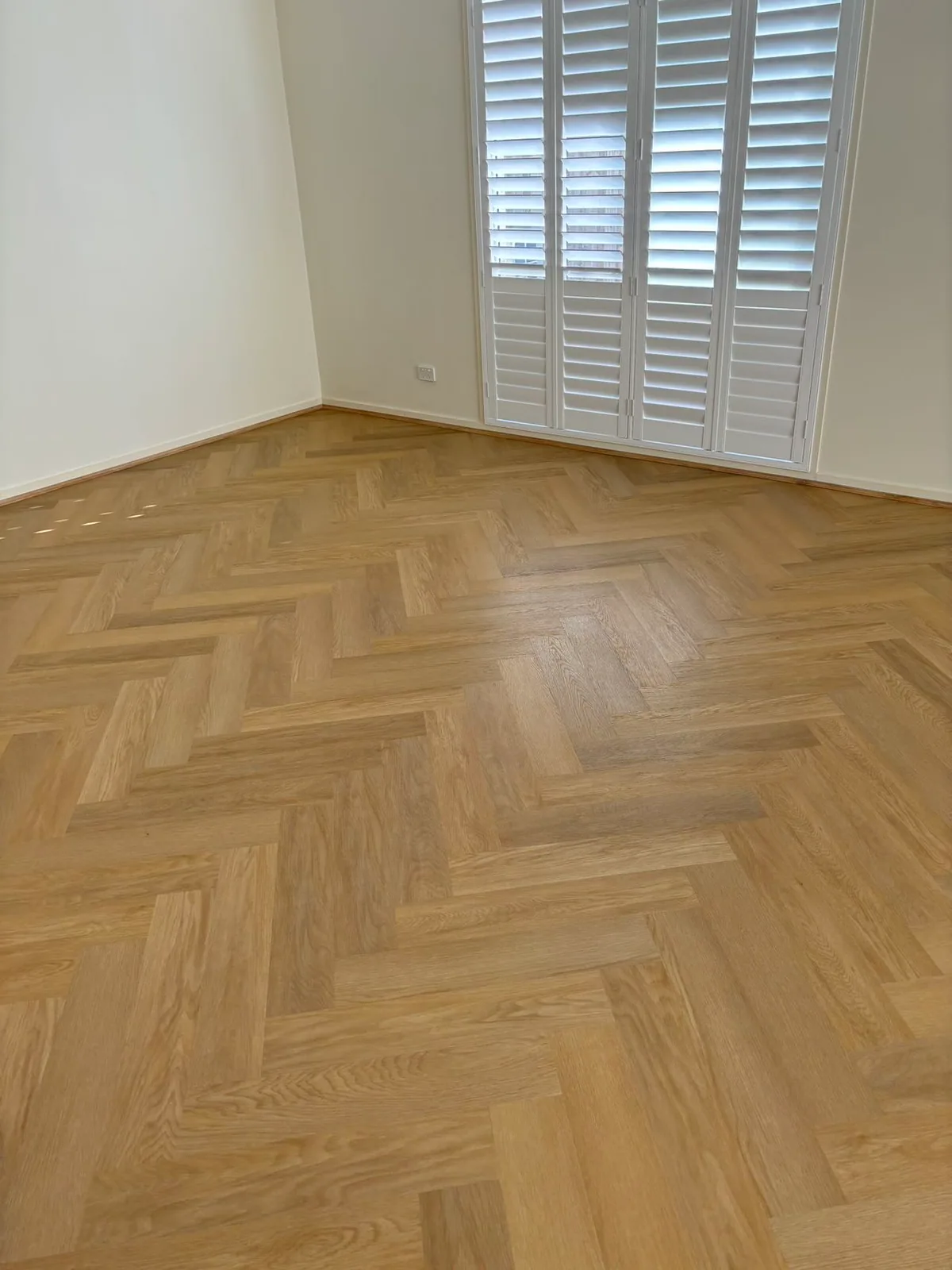

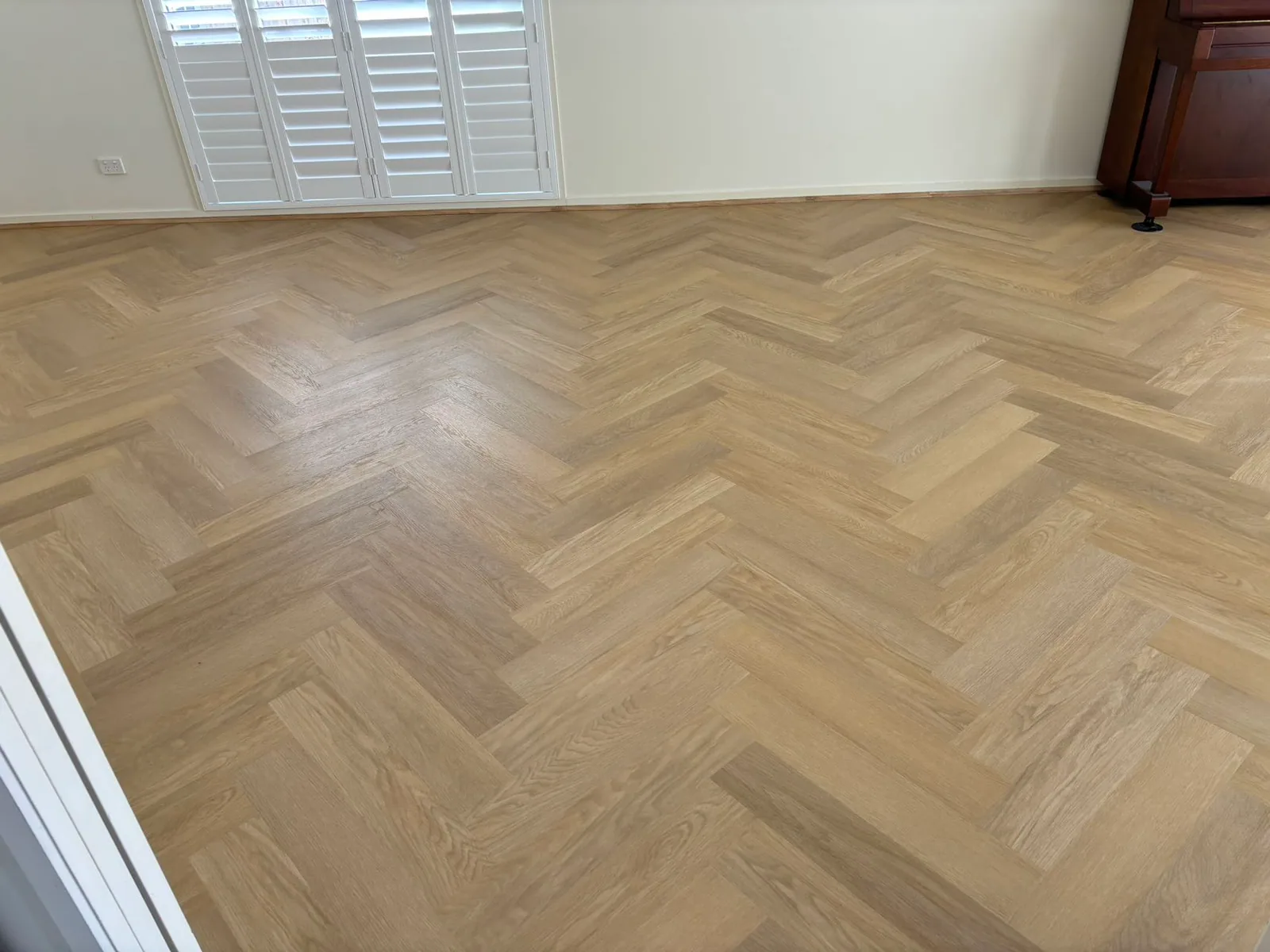
French Oak SPC Hybrid Floorboards Herringbone 7.5+2mm
$54.98/m² $78.62/box
Herringbone flooring is short boards laid at right angles in a zigzag, the end of each board meeting the side of the next. Ours comes in vinyl, hybrid and engineered oak, from $39.95/m², delivered Australia-wide.
Herringbone and chevron side by side: see all our parquetry flooring.
$54.98/m² $78.62/box
$54.98/m² $78.62/box
$54.98/m² $78.62/box
$54.98/m² $78.62/box
$54.98/m² $78.62/box
$103.99/m² $124.79/box
$103.99/m² $124.79/box
$54.98/m² $78.62/box
$103.99/m² $124.79/box
$103.99/m² $124.79/box
$103.99/m² $124.79/box
$103.99/m² $124.79/box
$103.99/m² $124.79/box
$103.99/m² $124.79/box
$54.98/m² $78.62/box
$39.95/m² $66.72/box
$39.95/m² $66.72/box
$39.95/m² $66.72/box
$39.95/m² $66.72/box
$39.95/m² $66.72/box
$39.95/m² $66.72/box
$39.95/m² $66.72/box
$39.95/m² $66.72/box
$103.99/m² $124.79/box
The same pattern in three floors. Here's how they compare, at today's prices.
| Herringbone | Vinyl herringbone | Hybrid herringbone | Oak herringbone |
|---|---|---|---|
| Price per m² | $39.95/m² | $54.98/m² | $103.99/m² |
| Colours | 8 colours, light to grey | 7 colours, light to grey | 9 colours, white to dark |
| Thickness | 4.5mm | 9.5mm (7.5mm board + 2mm underlay) | 15mm (3mm oak on top) |
| Board size | 914.4 x 152.4mm | 630 x 126mm | 600 x 125mm |
| How it's laid | Glued down, tight to the walls | Clicks together and floats | Glued down only |
| Water | 100% water resistant | 100% water resistant | Real timber: wipe up spills straight away |
| Impact sound (lower is quieter) | L'nT,w 52 | L'nT,w 41 (AAAC 5 stars) | L'nT,w 45 (AAAC 5 stars, over 2mm foam underlay) |
| Warranty for homes | Lifetime (limited) | 25 years, plus a lifetime structural warranty | 25 years, plus a lifetime structural warranty |
| Best for | The lowest price, kitchens and laundries | Laying it yourself, busy homes and apartments | Real oak grain underfoot |
Prices are per m² of floor. Sound figures are from each floor's impact sound test over a concrete slab; the reports are on each product page. Warranties are the makers' own: Riverhill for the hybrid and oak, Artifloor for the vinyl. Floors are delivered Australia-wide in 1 to 7 business days, depending on your location.
m², at today's prices for the lowest-priced colour of each kind, with 15% extra for cuts:
| Floor | Boxes | Floor cost | Laying | Total | Same floor as planks |
|---|---|---|---|---|---|
| Vinyl herringbone | 14 boxes of 1.67 m² | $934.08 | Get a quote | $934.08 plus laying | $781.20 (floor only) |
| Hybrid herringbone | 17 boxes of 1.43 m² | $1,336.54 | $840 | $2,176.54 | $1,861.86 |
| Oak herringbone | 20 boxes of 1.2 m² | $2,495.80 | $1,200 | $3,695.80 | $3,188.48 |
The floor is rounded up to whole boxes. Laying is from our instant quote for a standard room, and vinyl herringbone is priced for your room. Glue, taking up an old floor, levelling, trims and delivery are extra; checkout prices delivery to your suburb.
Herringbone costs more than planks three ways: a higher price per m², 15% extra for cuts against 10%, and slower laying. Same floor as planks is that floor laid as straight planks, so you can see the difference for your room.
How the boards meet, why you order extra, and how our hybrid herringbone clicks together.
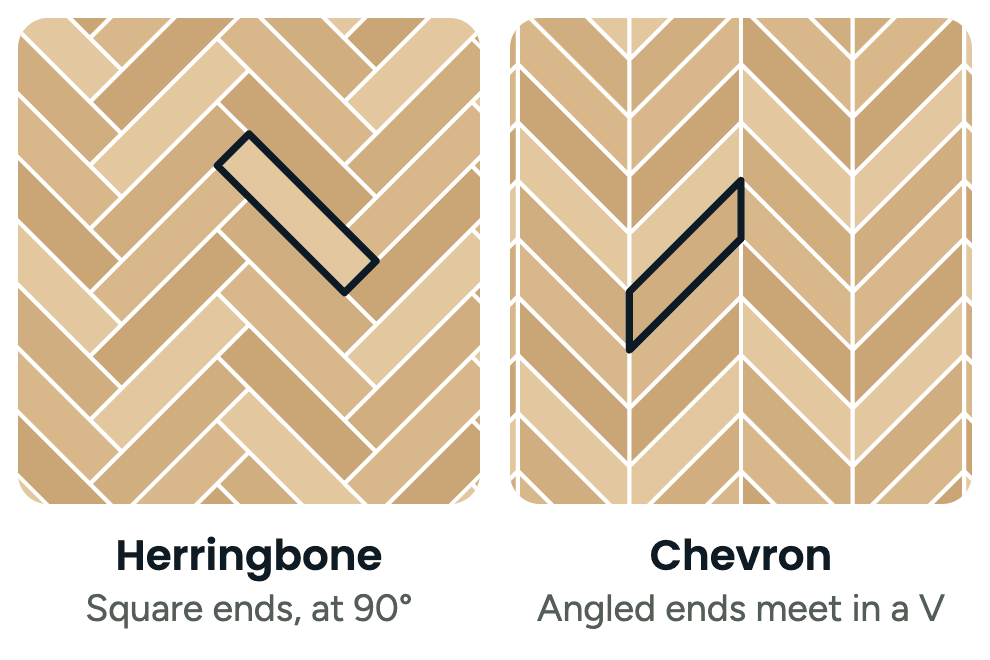
Herringbone boards have square ends that meet the side of the next board. Chevron boards have angled ends that meet in a point.
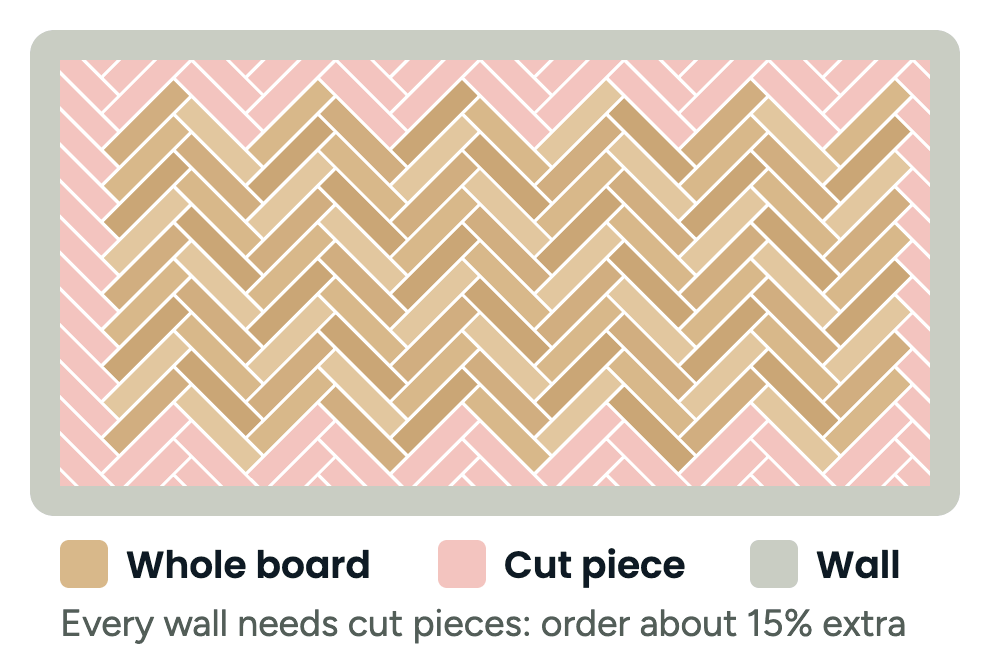
Every wall needs cut pieces, and many offcuts are too small to use, so order about 15% more than the room's area. Planks need about 10%.
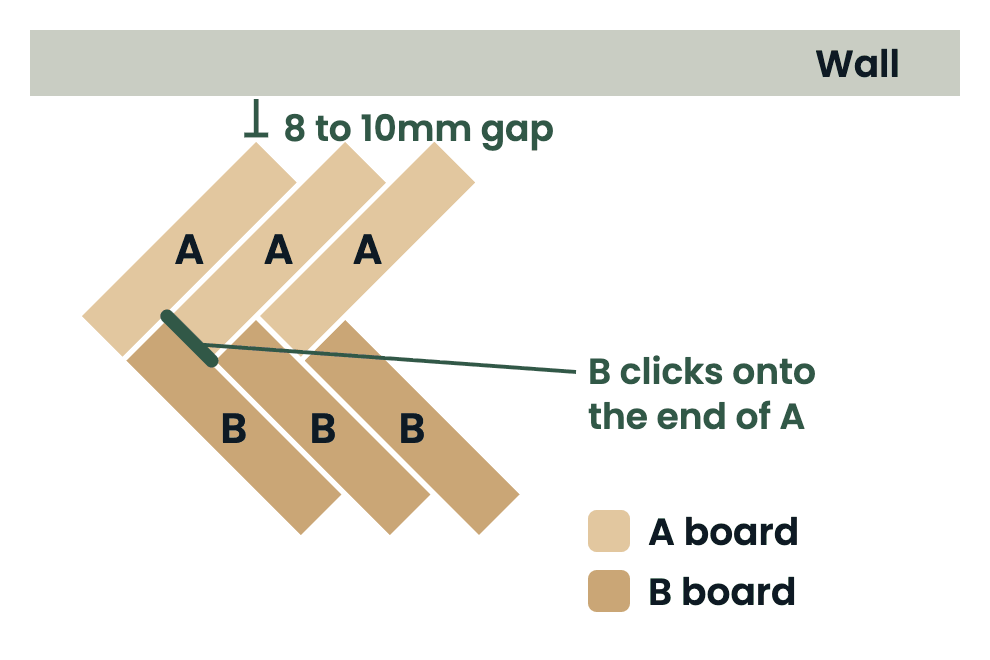
Our hybrid herringbone comes as A and B boards. Fold the long side of each B board down onto the end of an A board, and leave an 8 to 10mm gap at the walls.
Straight answers to what people search for most.
Yes, a little. The same floor costs about 10 to 14% more per m² as herringbone:
You also order more, about 15% extra for cuts against 10% for planks, and it takes longer to lay: our instant quote charges $42/m² for hybrid herringbone against $35/m² for hybrid planks. A 20 m² room of our 9.5mm hybrid comes to $2,176.54 laid as herringbone, against $1,861.86 as planks.
It depends on the room and your budget:
See all three side by side in the table above, or order samples of each.
Mostly cost and laying time:
Our hybrid and oak warranties don't cover bathrooms or rooms with a floor drain. Want fewer downsides? Hybrid herringbone clicks together, floats and is 100% water resistant.
Neither is better. It's about the look and the job:
Many homes use both: herringbone in the living room and planks in the bedrooms. Our 9.5mm hybrid comes both ways in the same colours, so they sit side by side. See plank vs herringbone hybrid.
No. Herringbone has been laid in homes for hundreds of years, and it's still one of the most searched floor patterns in Australia: about 4,400 searches a month for herringbone flooring (Semrush, October 2026), against 1,300 for chevron.
The colour dates a floor faster than the pattern. Mid-tone oaks and natural timber looks stay easy to live with, and greys suit a modern home.
It can. Laid along the length of a room or hallway, the zigzag leads the eye down it, so the space reads longer. Light colours open a room up, while a busy pattern can crowd a small room full of furniture.
Run the zigzag along the longest wall, or towards the main view, like a window or the back door.
Our hybrid herringbone, yes, if you're handy. It clicks together and floats, with the underlay already attached. The A and B boards lock into each other, and the first four rows set the pattern for the whole room, so take your time there. Its installation guide is on every product page.
Vinyl and oak herringbone are glued down, so get those laid by a flooring installer. Our instant quote prices an install, or book one through Airtasker.
About 15% more than the room's area, against 10% for planks, because every wall and doorway needs cut pieces. Chevron needs 15 to 20%.
For a 20 m² room, that's 23 m², or 17 boxes of our hybrid herringbone (1.43 m² a box). Keep any spare boxes for repairs. The flooring calculator works out the boxes for your room.
Our herringbone comes in vinyl, hybrid and engineered oak. If you're after laminate's easy click-together laying, our hybrid herringbone clicks together the same way and is 100% water resistant, from $54.98/m². For the lowest price, vinyl herringbone starts at $39.95/m².
Yes. Our hybrid and vinyl herringbone are 100% water resistant. With any floor, put a mat in front of the sink and wipe up spills straight away.
Fit the floor around a kitchen island, not under it. A heavy island shouldn't sit on a floating floor like our hybrid, and Artifloor's warranty doesn't cover stone benches placed on its vinyl.
Yes, with the right floor. Many strata buildings ask for a tested sound rating before you lay a hard floor. In impact sound tests over a concrete slab, our 9.5mm hybrid scored L'nT,w 41 (AAAC 5 stars) and our 15mm oak L'nT,w 45 (AAAC 5 stars, over 2mm foam underlay). The lower the number, the quieter the floor for the people below.
A floor laid wall to wall usually tests a little worse than the sample, so ask your strata what they need. The test reports are on each product page, ready to send.
Yes: order up to 3 free samples. Shipping is $15, refunded when you order your floor. Floors are delivered Australia-wide, Melbourne and Sydney included, in 1 to 7 business days depending on your location. In Brisbane, see them at our showroom in Albion, Monday to Friday, 8am to 5pm.
Look at samples in your own light, by day and at night. A herringbone floor shows a lot of board ends, so colour and grain matter more than with planks.
Still deciding?
Board build, plank size, sound ratings and price per m², two floors side by side.
Each kind goes down its own way. This is what the makers' installation guides say. Want it laid for you? Our instant quote prices hybrid and oak herringbone installs.
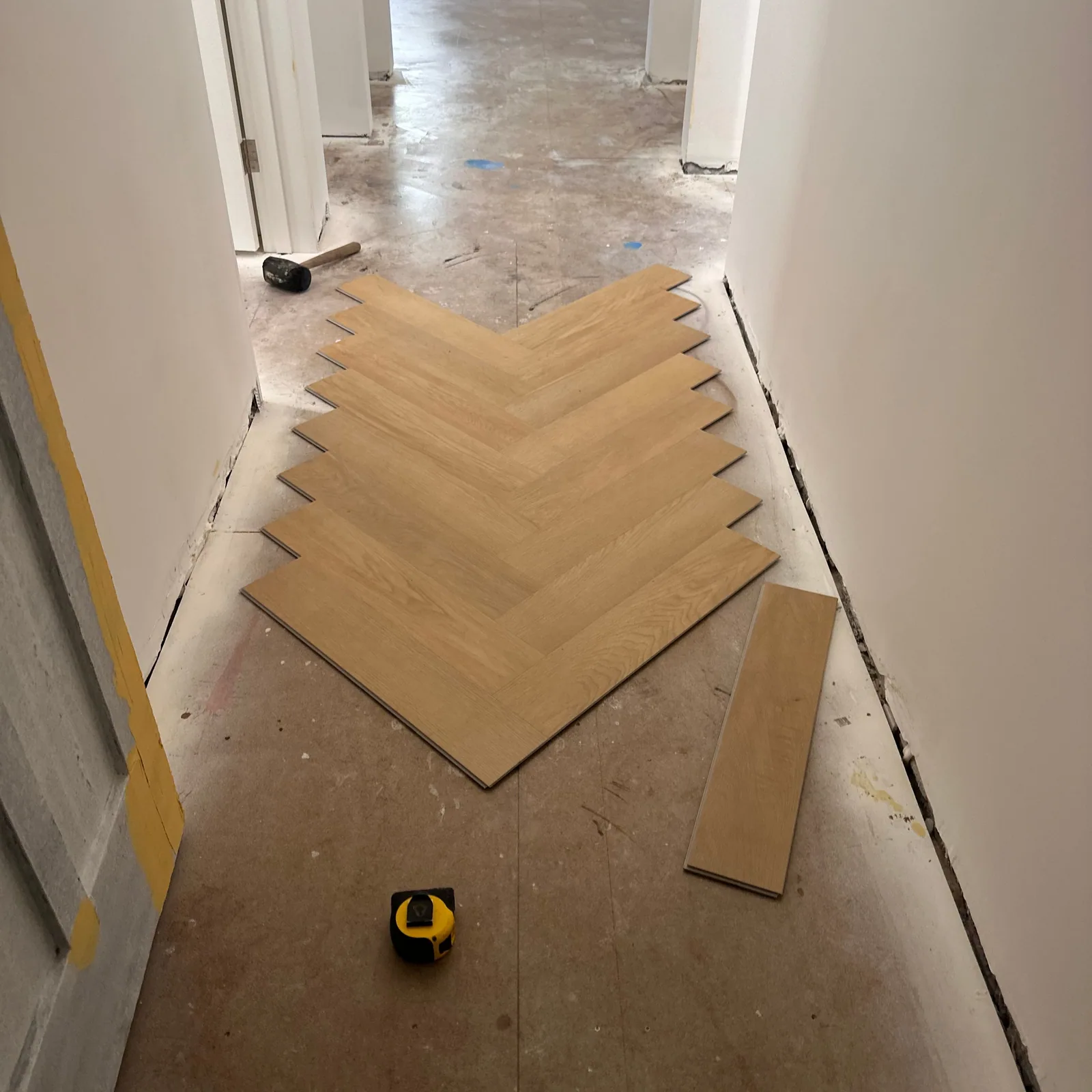
It comes as A and B boards that lock into each other and float on the floor below, on the 2mm underlay already attached. Start in a corner with an A board at 45° to the wall, then fold each B board down onto the end of the last A board. Keep the first four rows straight and parallel to the wall. Leave an 8 to 10mm gap at every wall for skirting or scotia to cover, and glue only the smallest cut pieces.
The planks have no click joint. They're glued to a flat, clean, dry floor and fitted tight to the walls, with no gap. Roll the floor as you go, then keep everyone off it for 72 hours. New concrete needs at least 28 days to cure first.
Glue is the only way to lay herringbone in engineered oak. The floor below must be flat to within 3mm over 3m², dry, and sealed with a roll-on moisture barrier. Leave a 10 to 15mm gap at the walls and wait 24 hours before moving furniture in. New concrete needs at least 60 days to cure first.
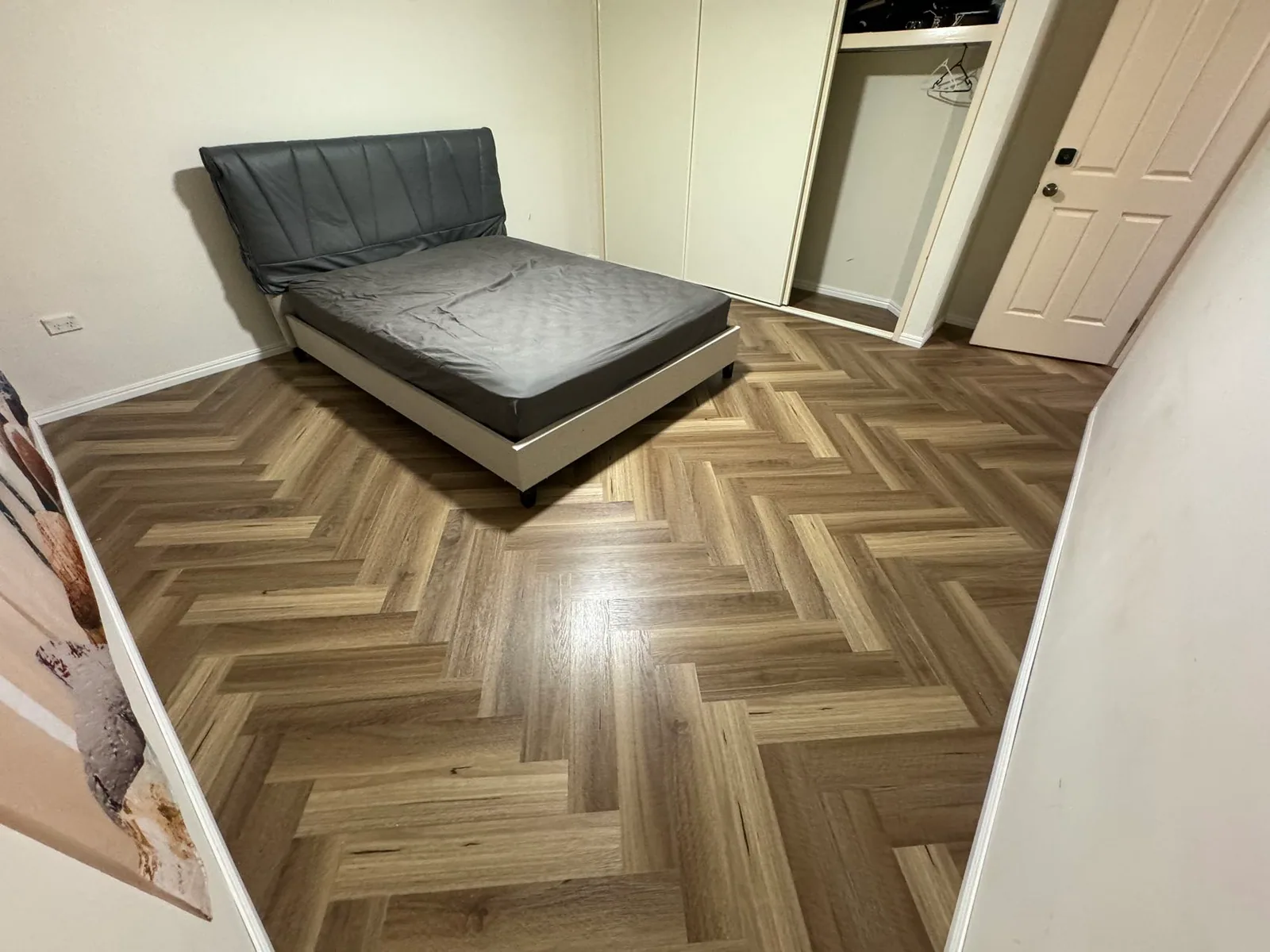
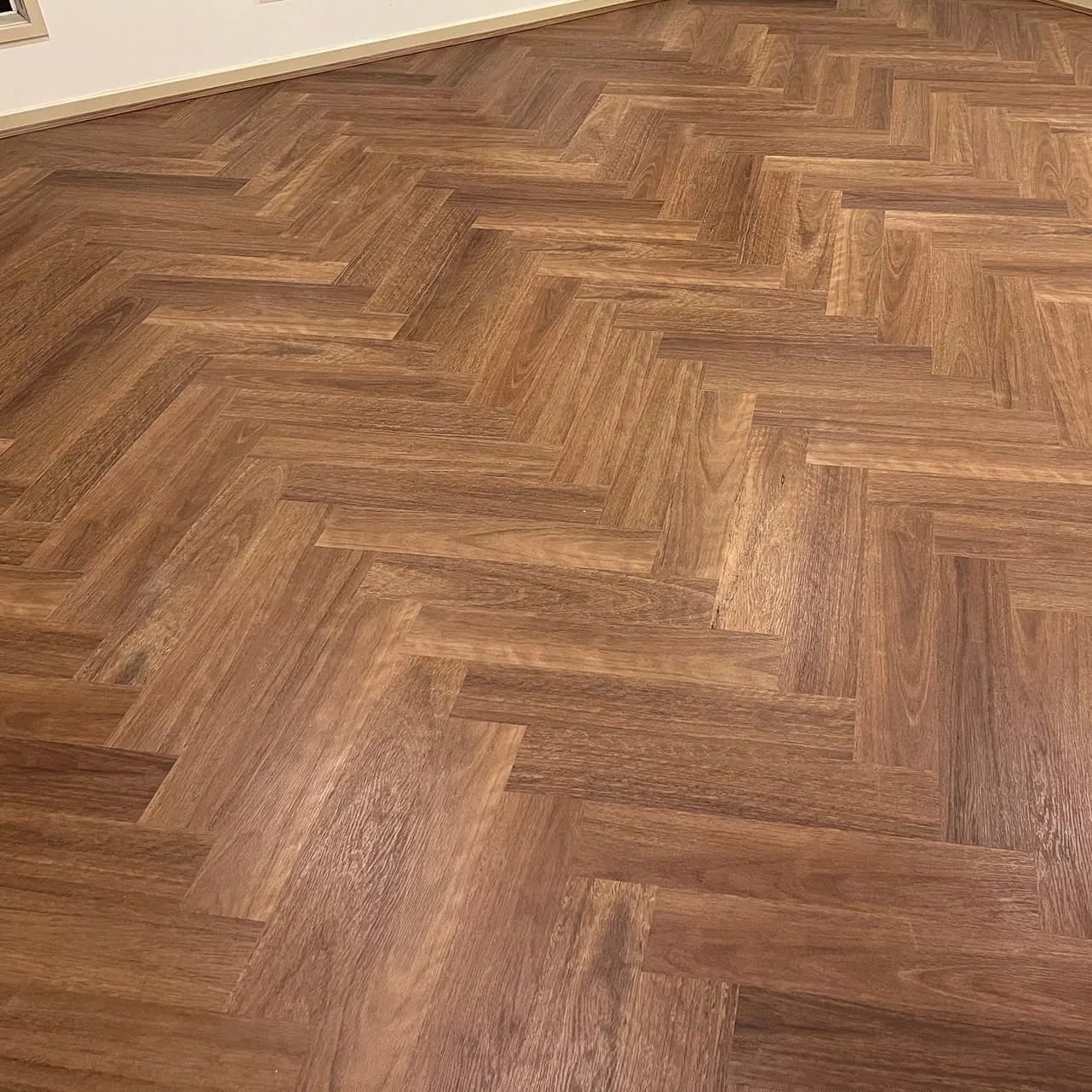
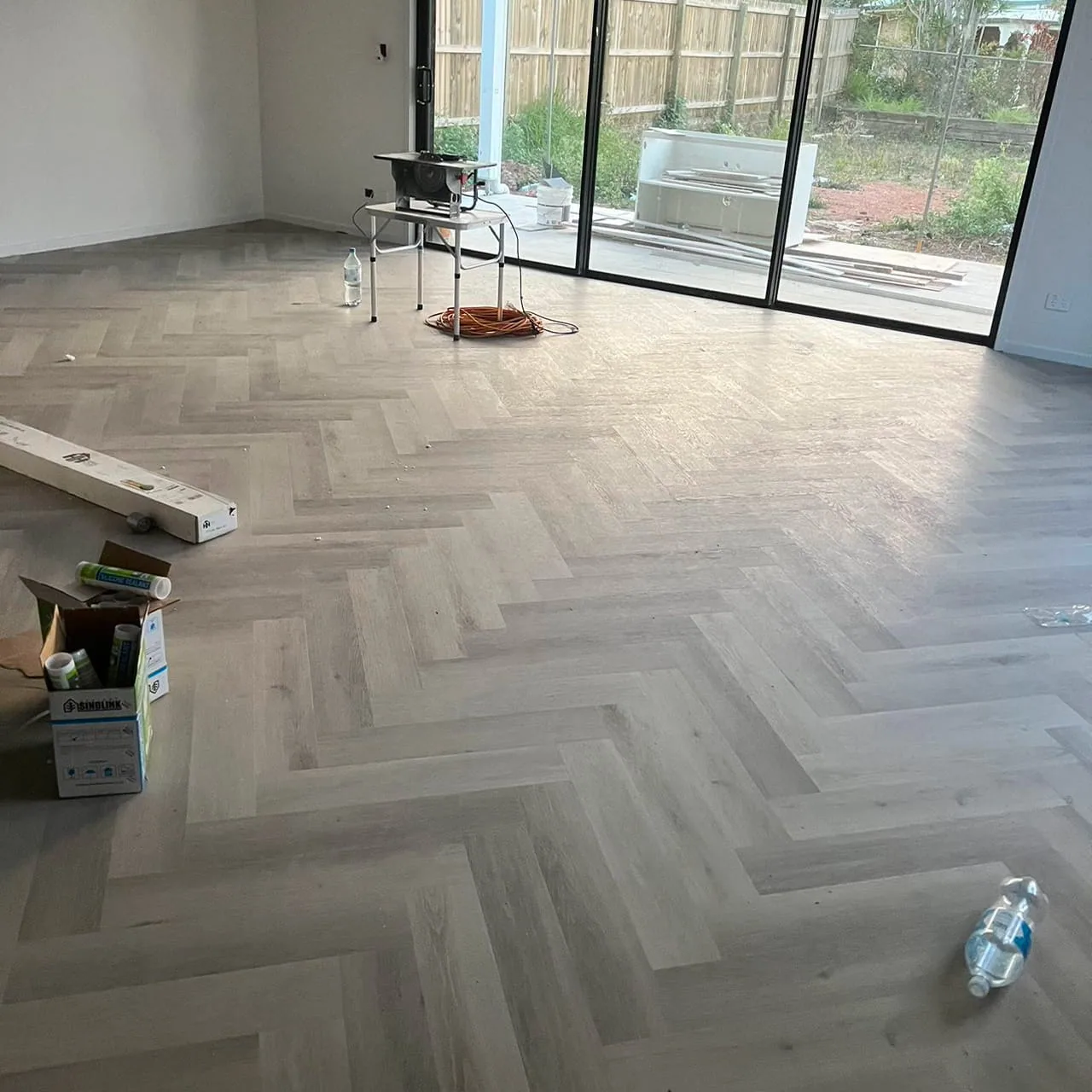
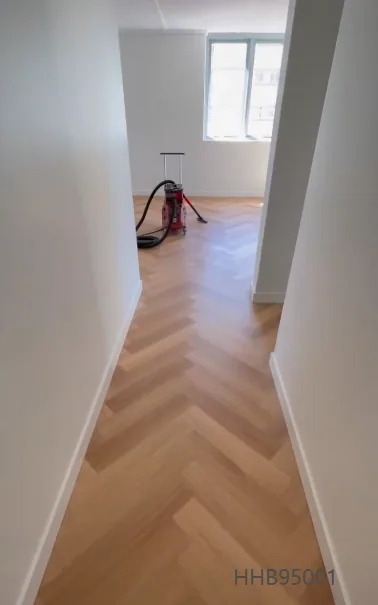
Our 9.5mm hybrid herringbone, laid in customers' homes. Tap a photo to see that colour.
Choose, price and lay your herringbone floor:
Order up to 3 free samples and lay them side by side at home. Shipping is $15, refunded when you order your floor.