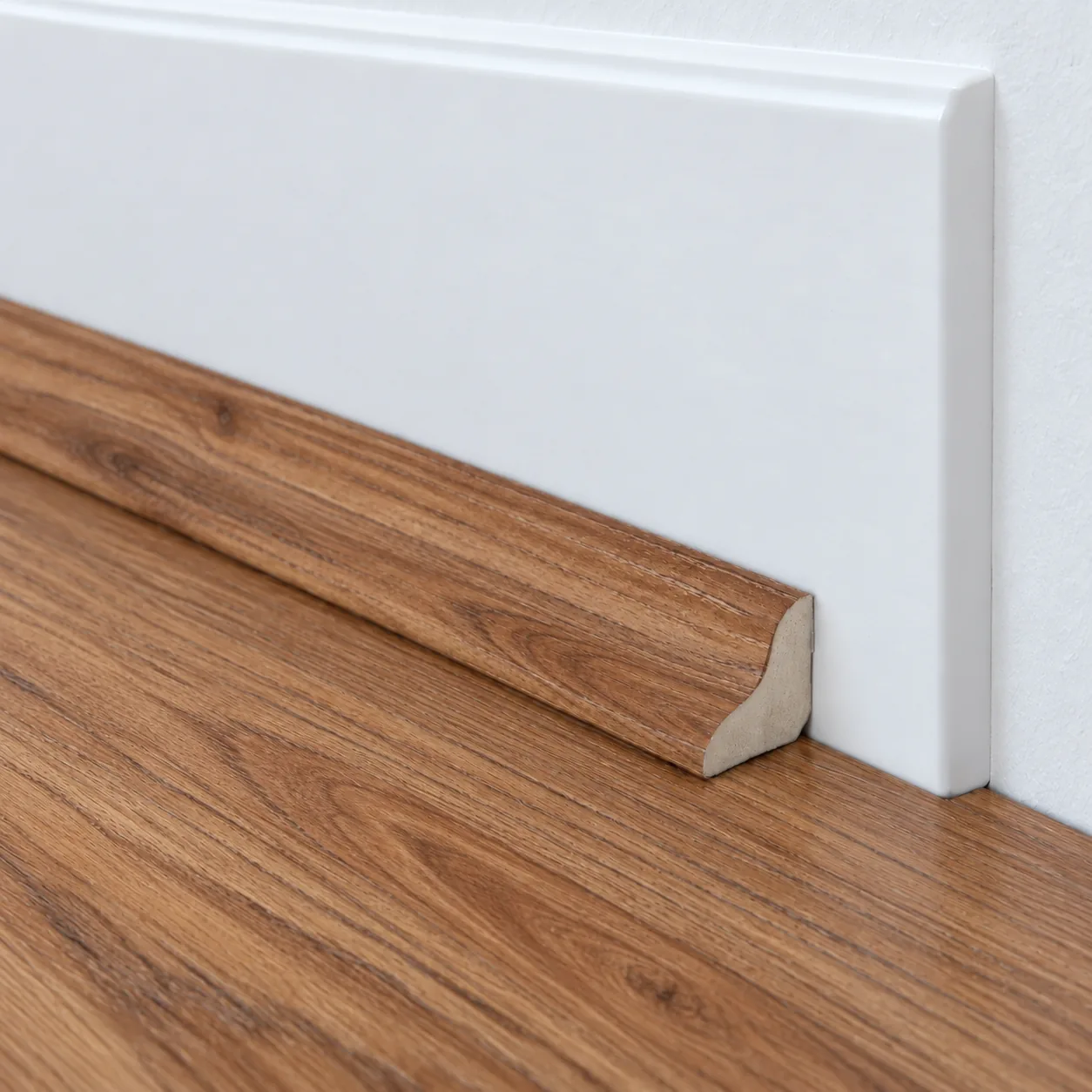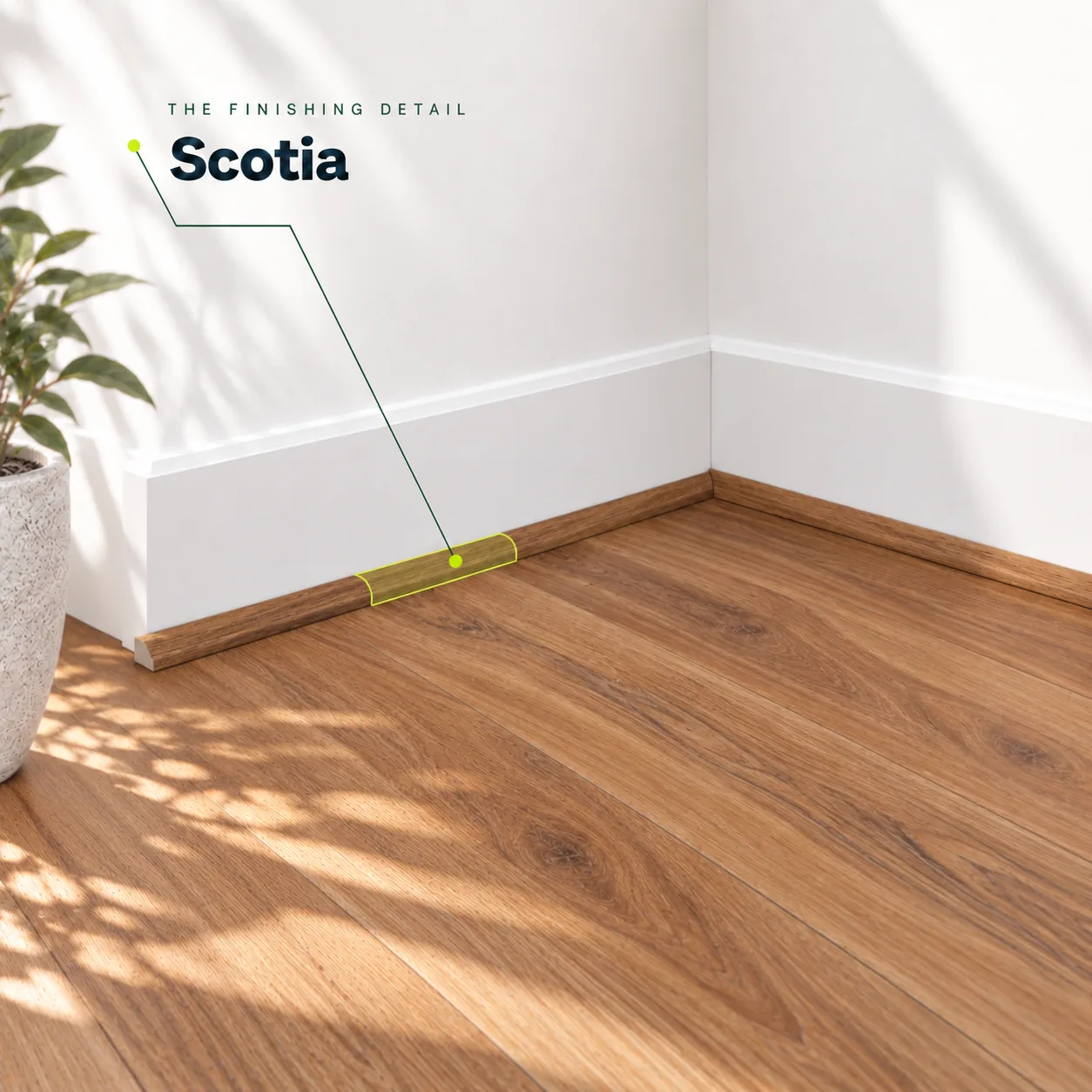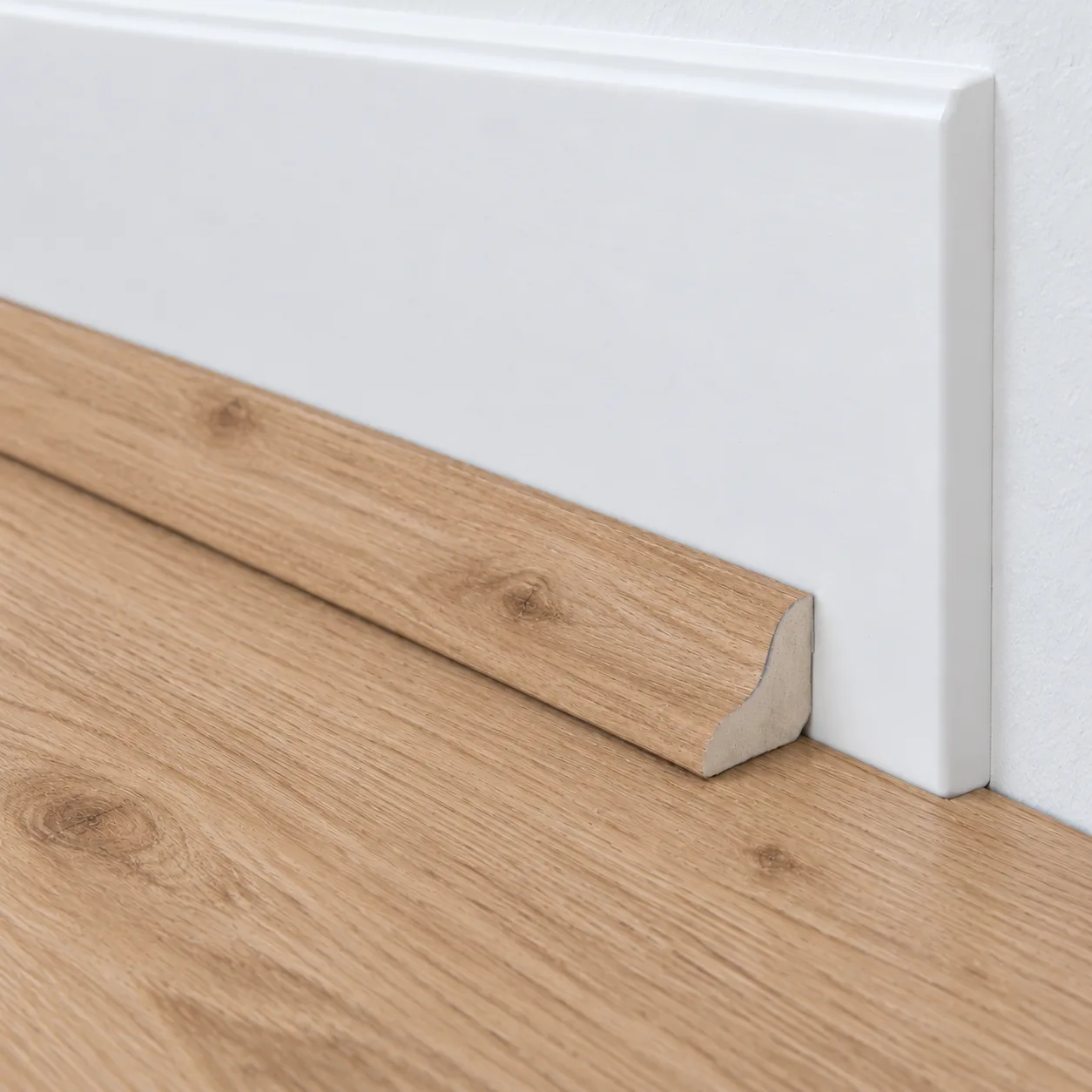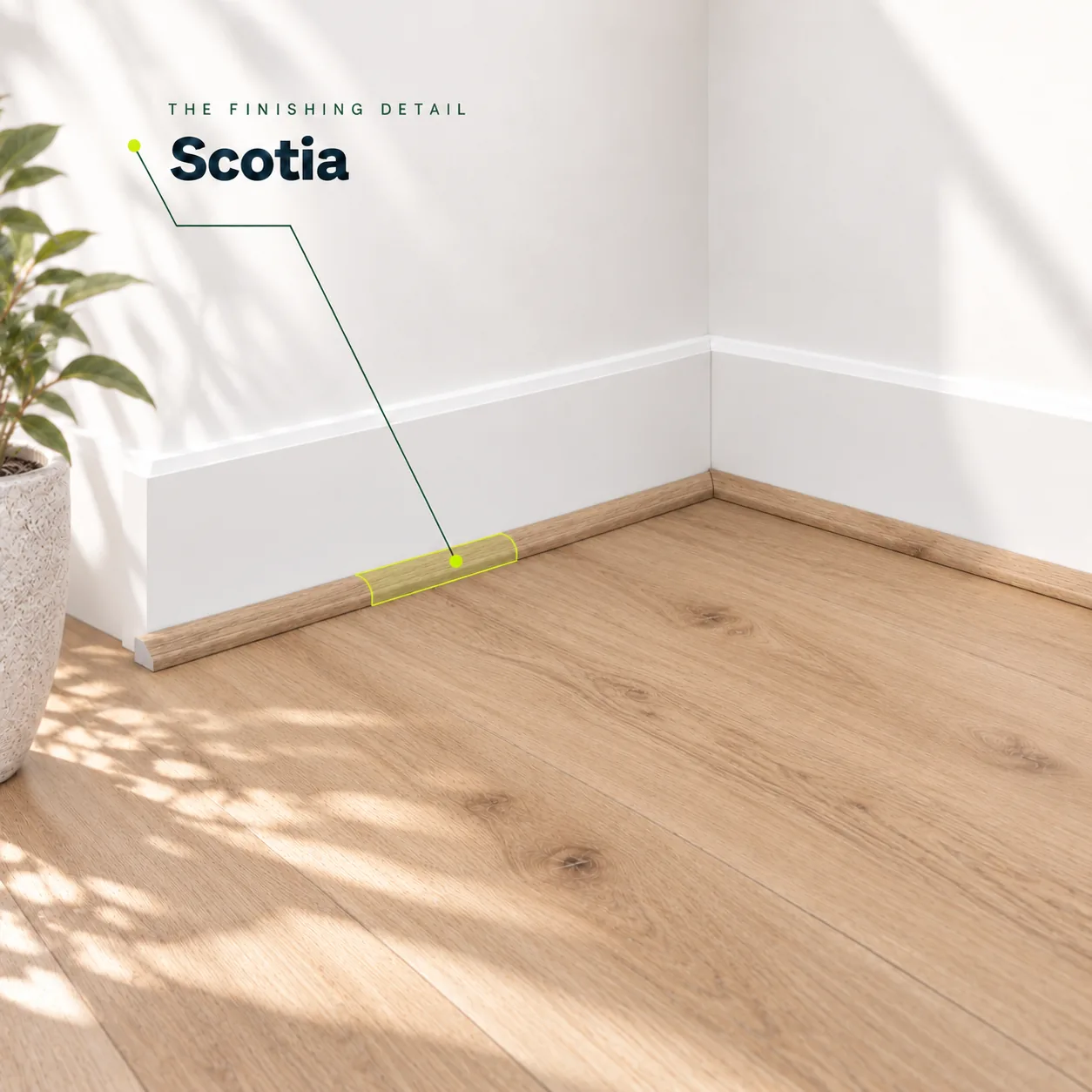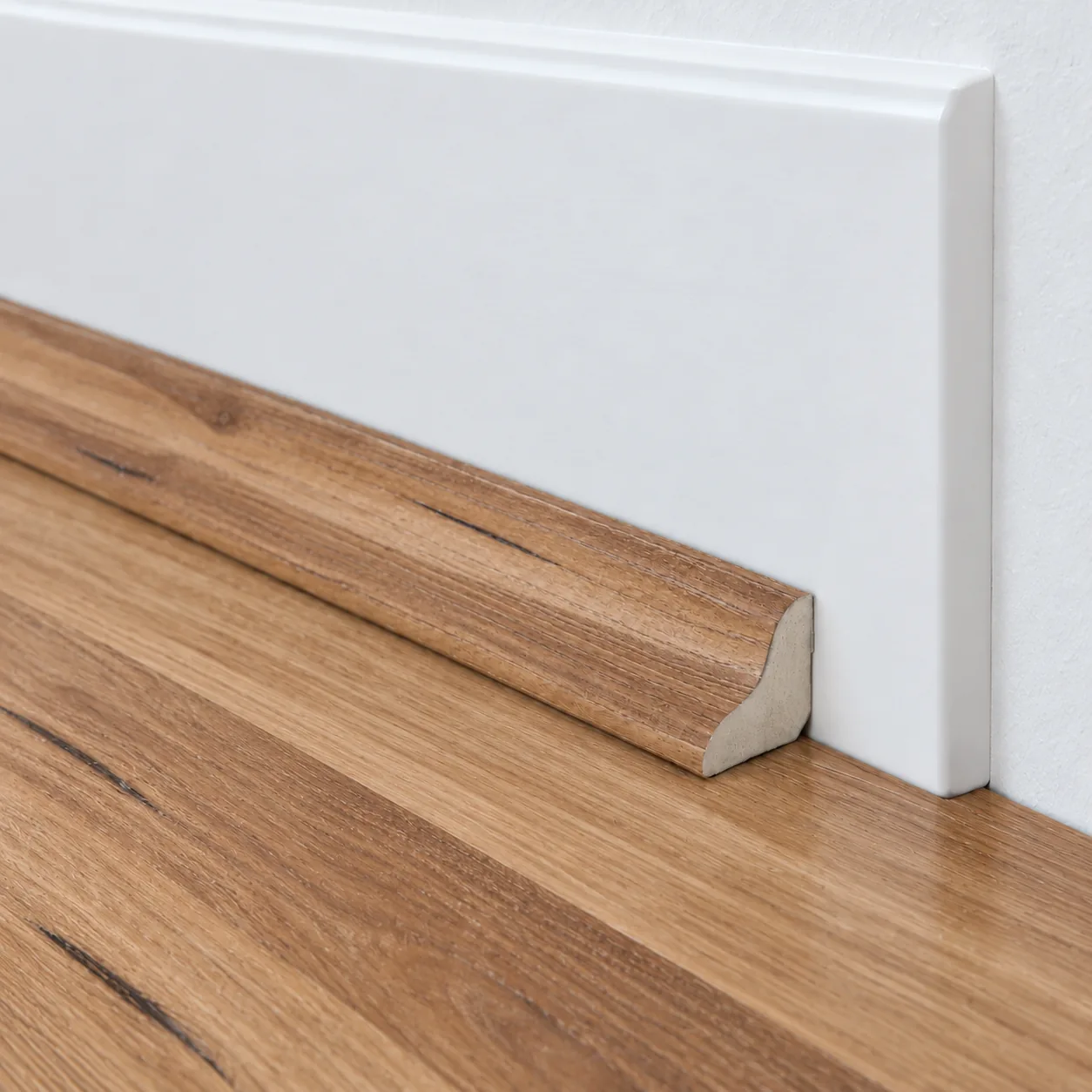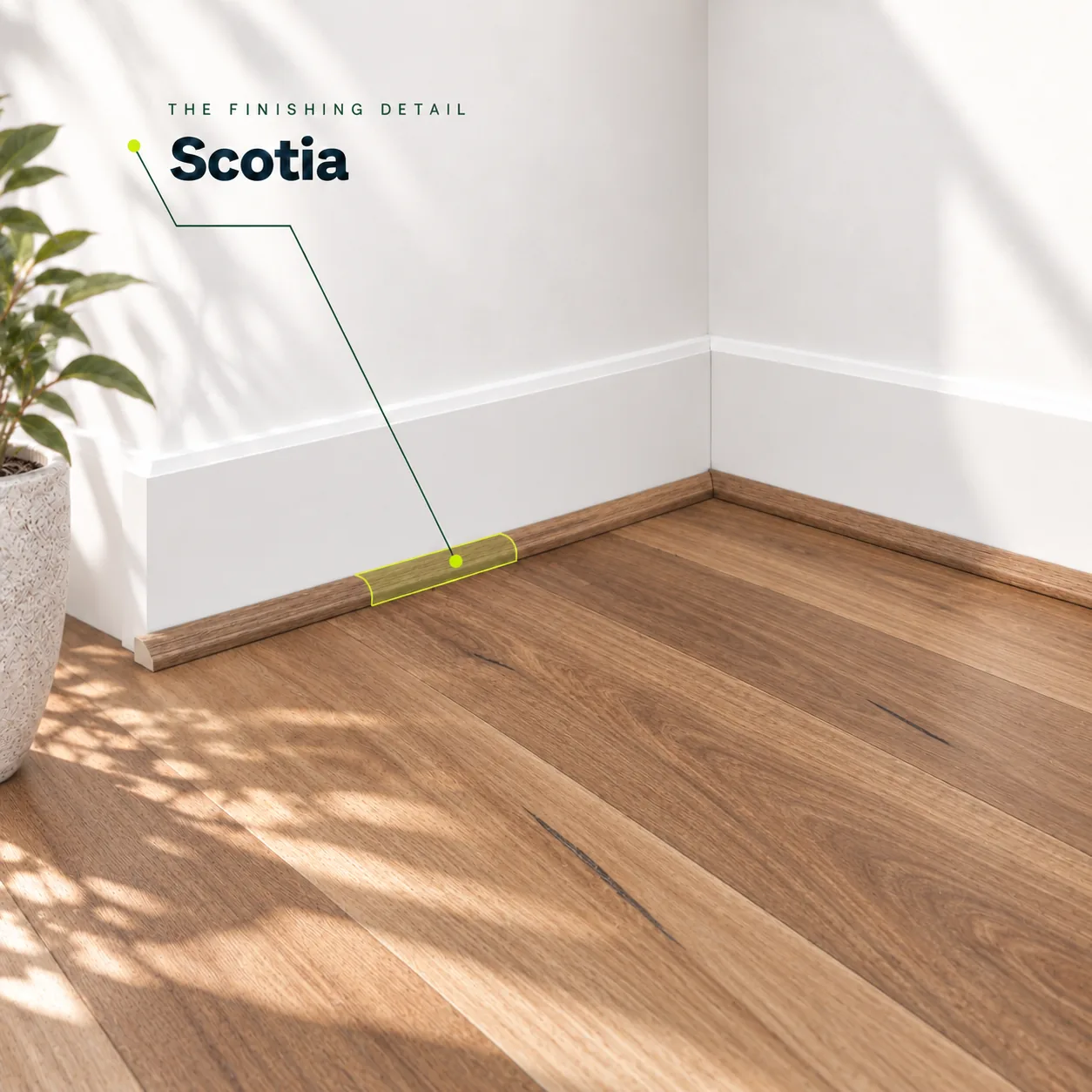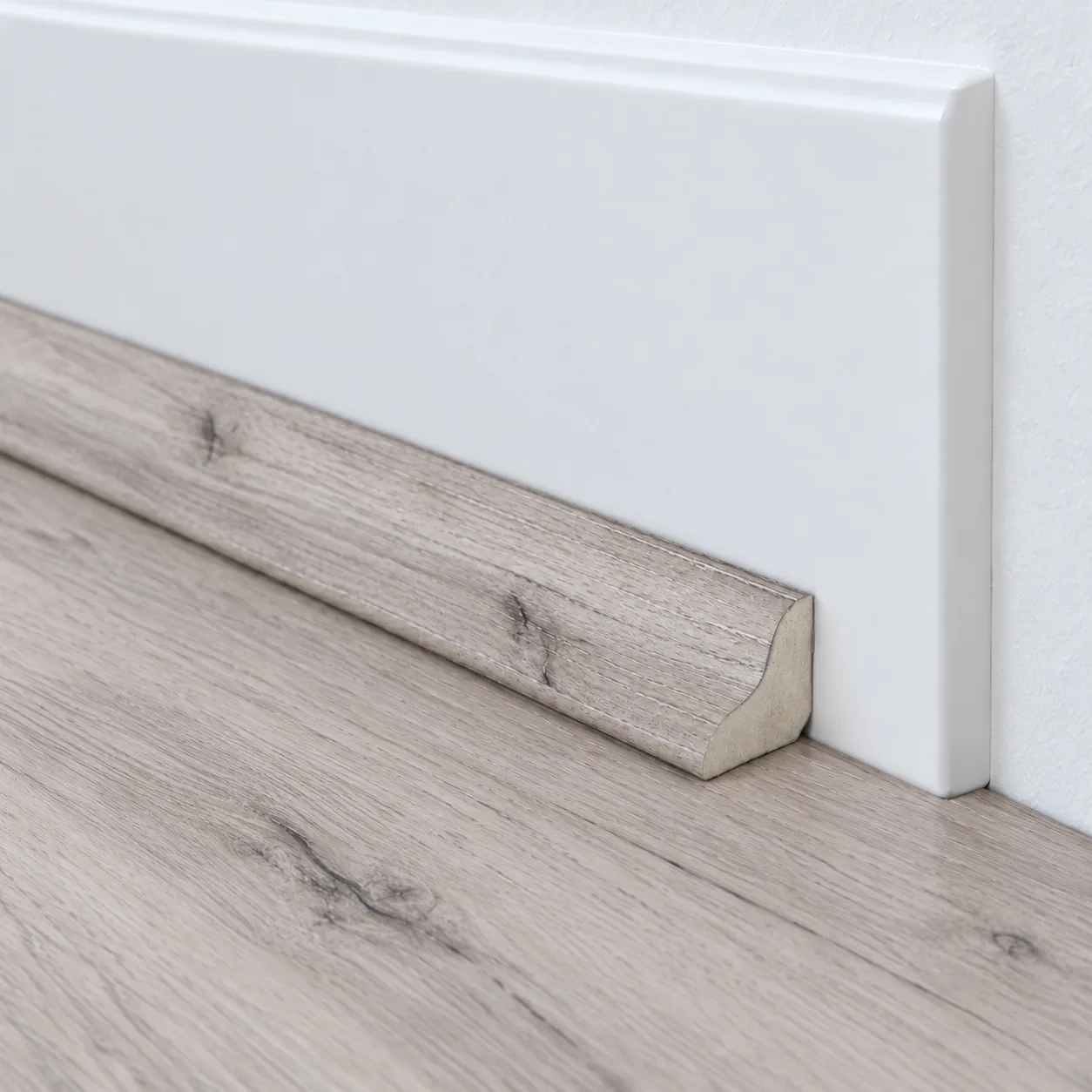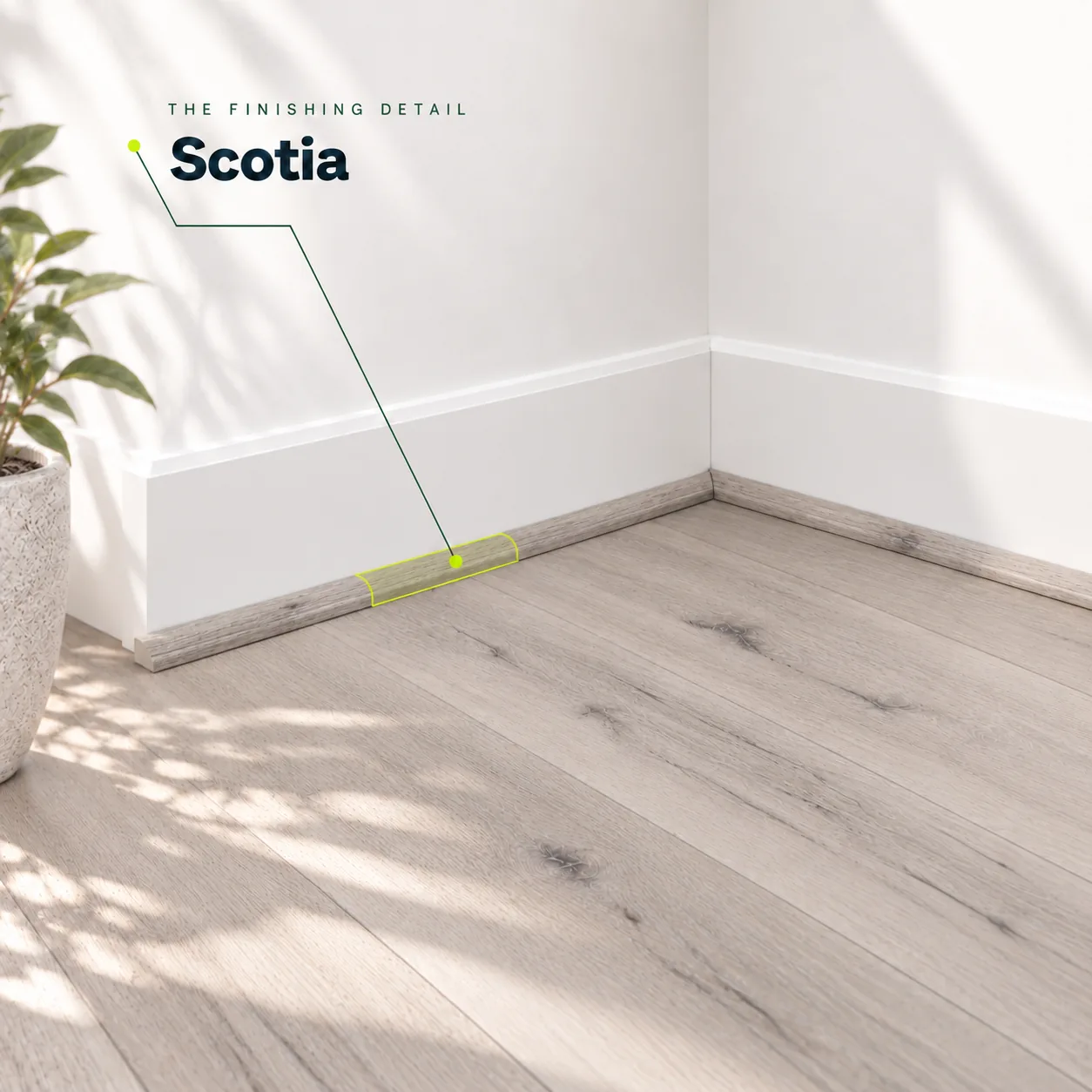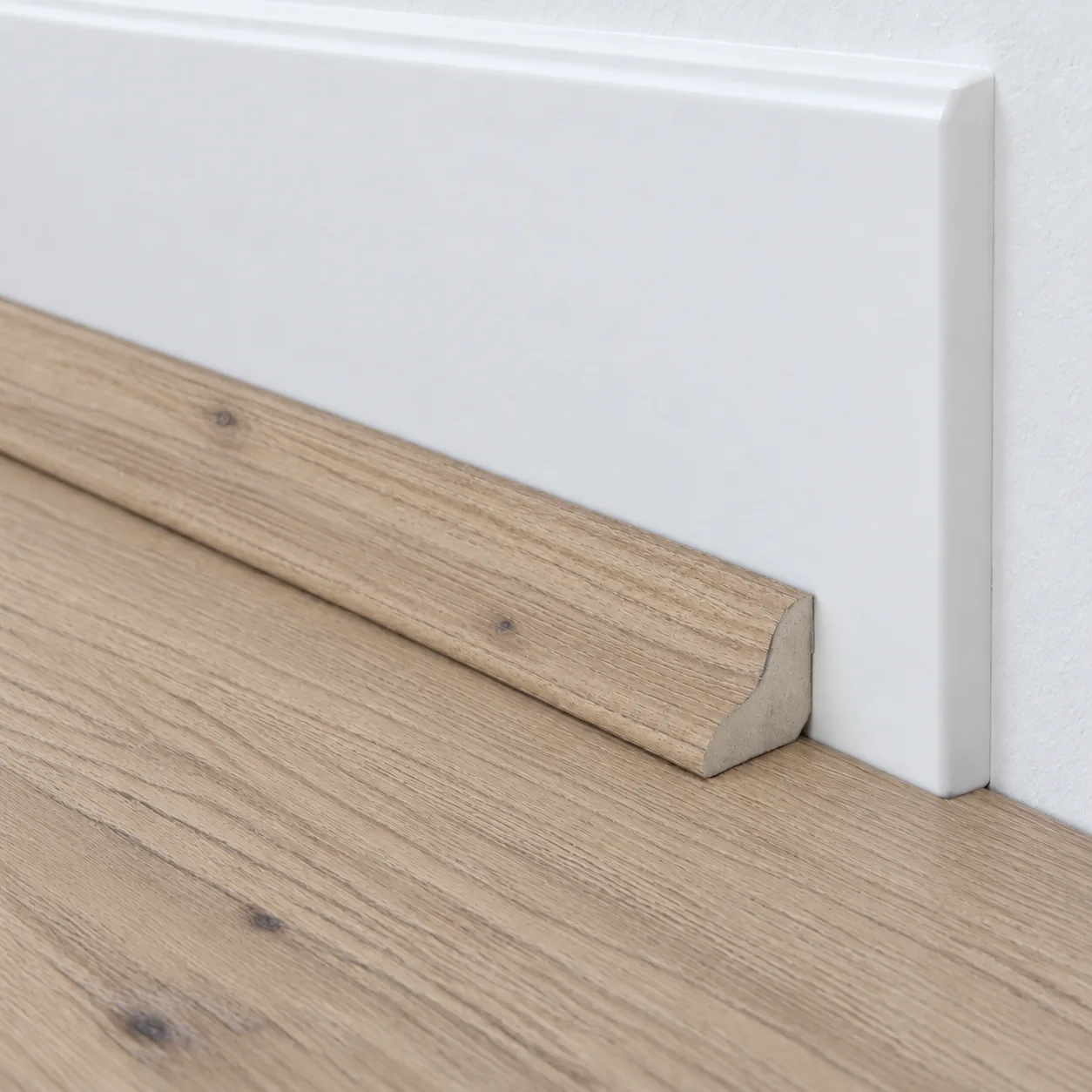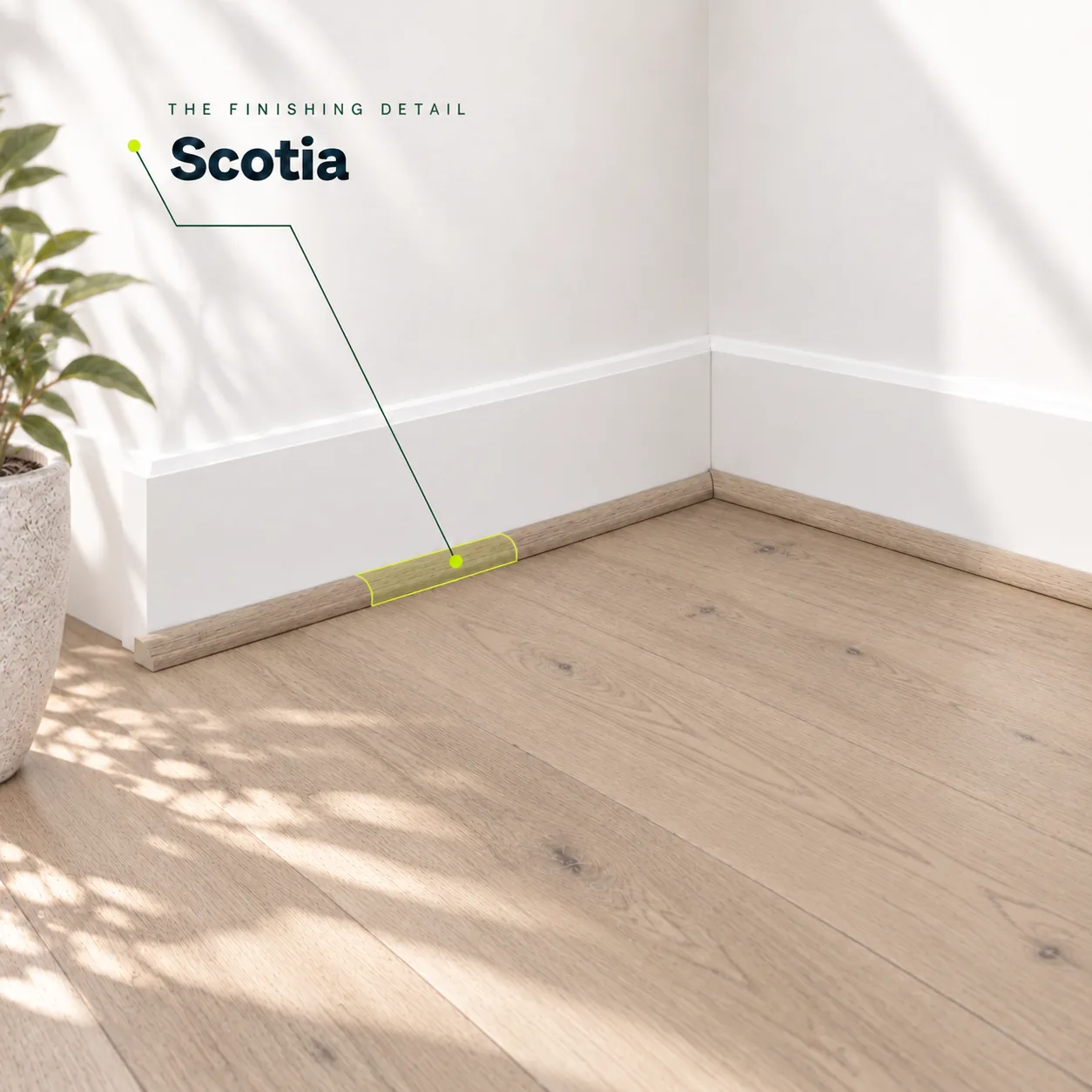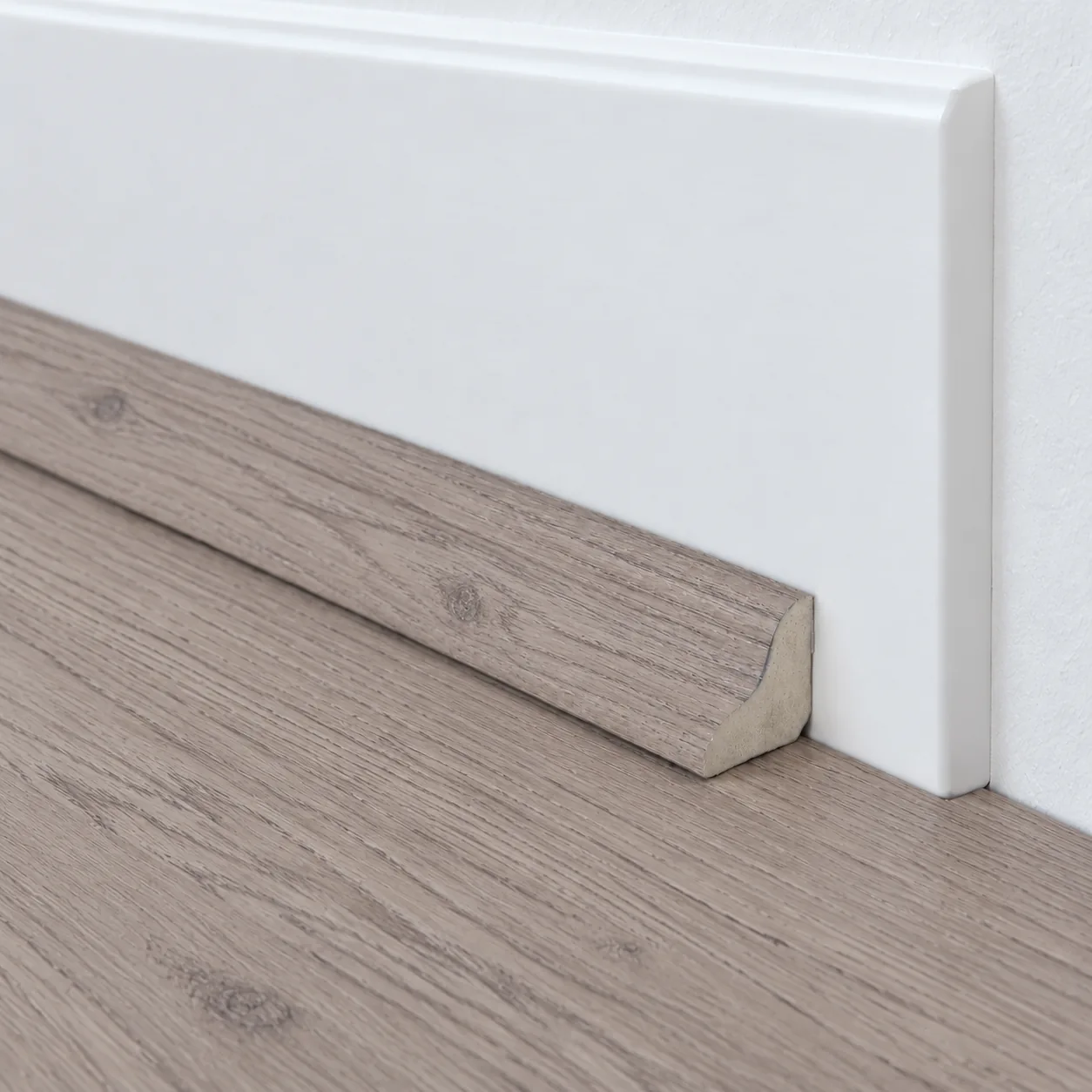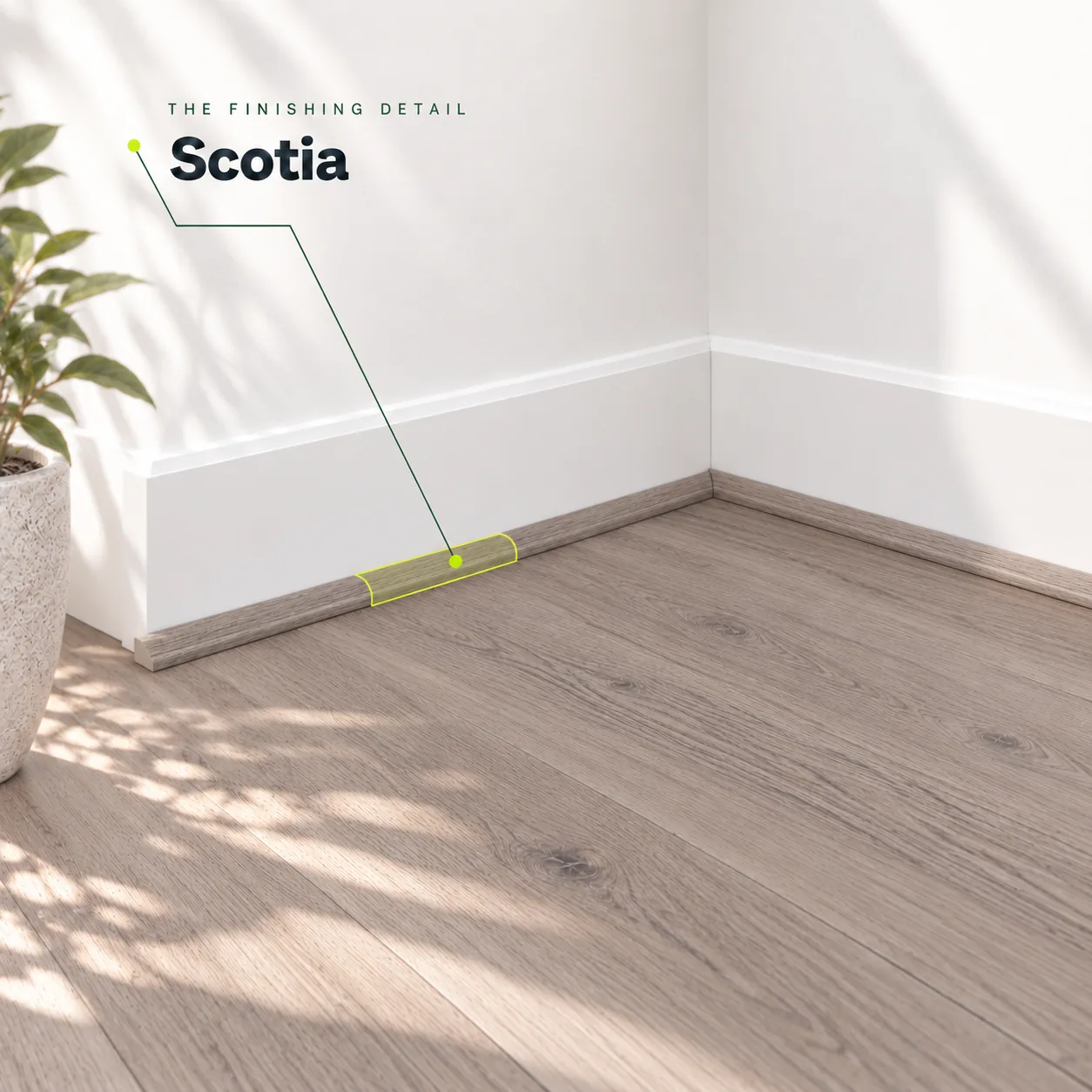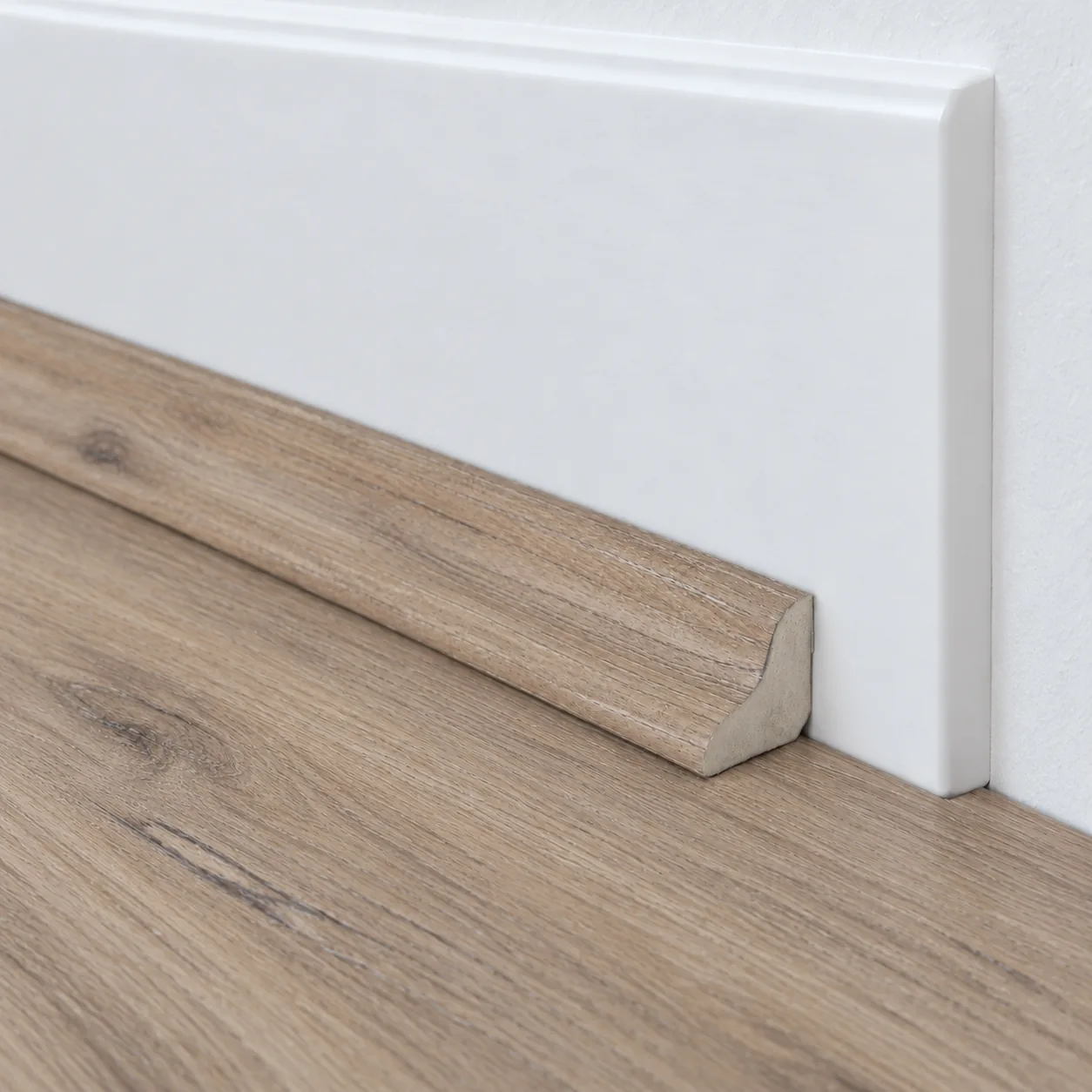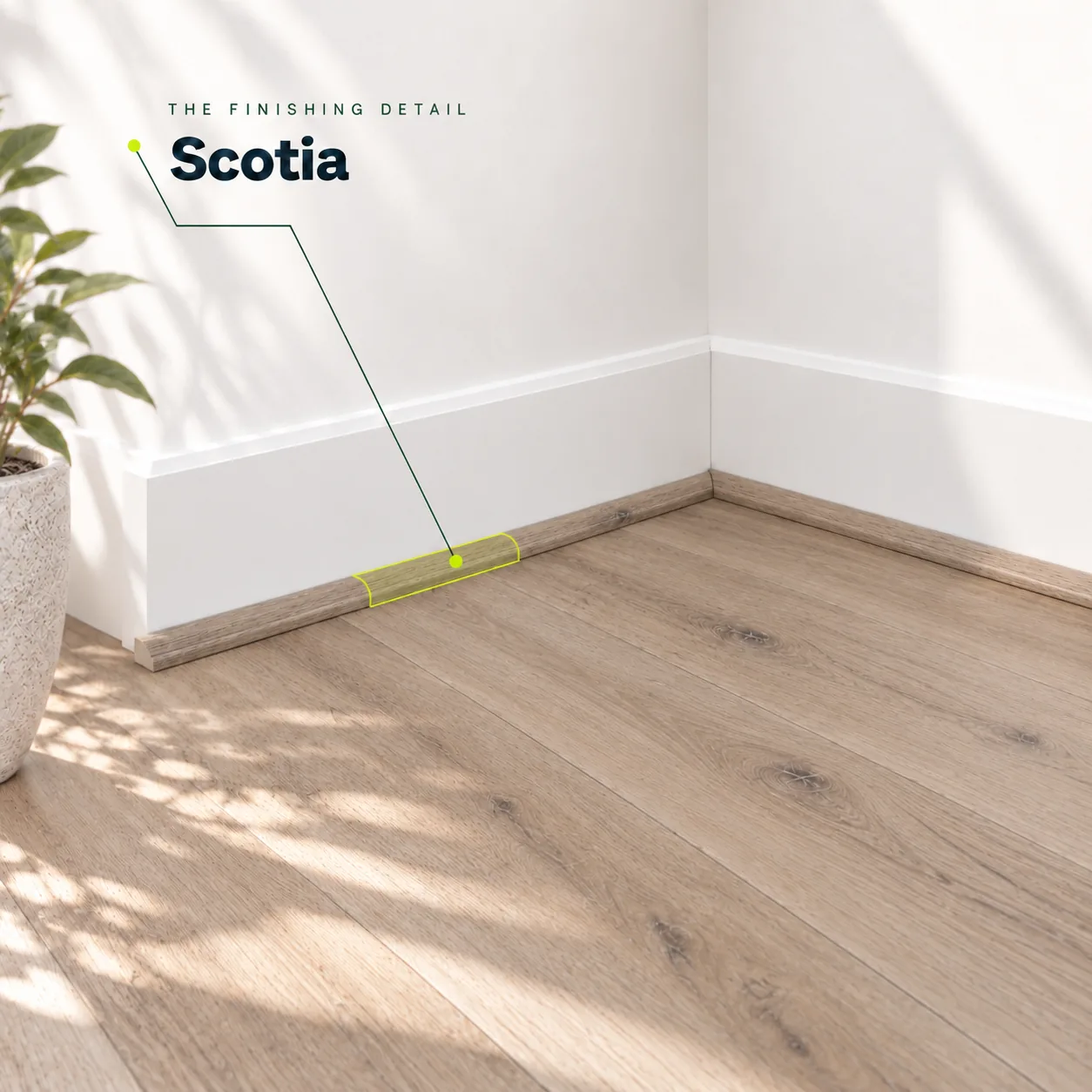
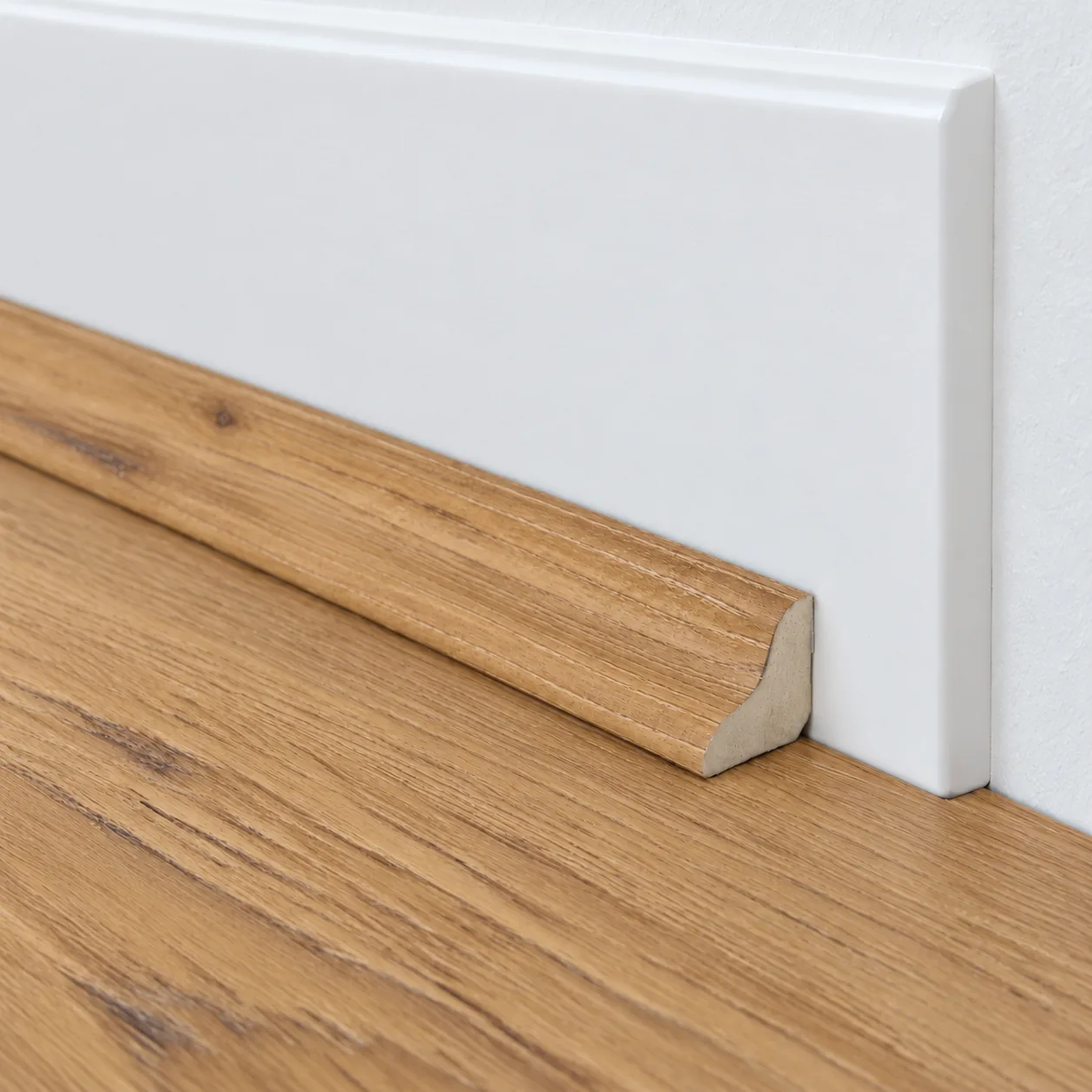
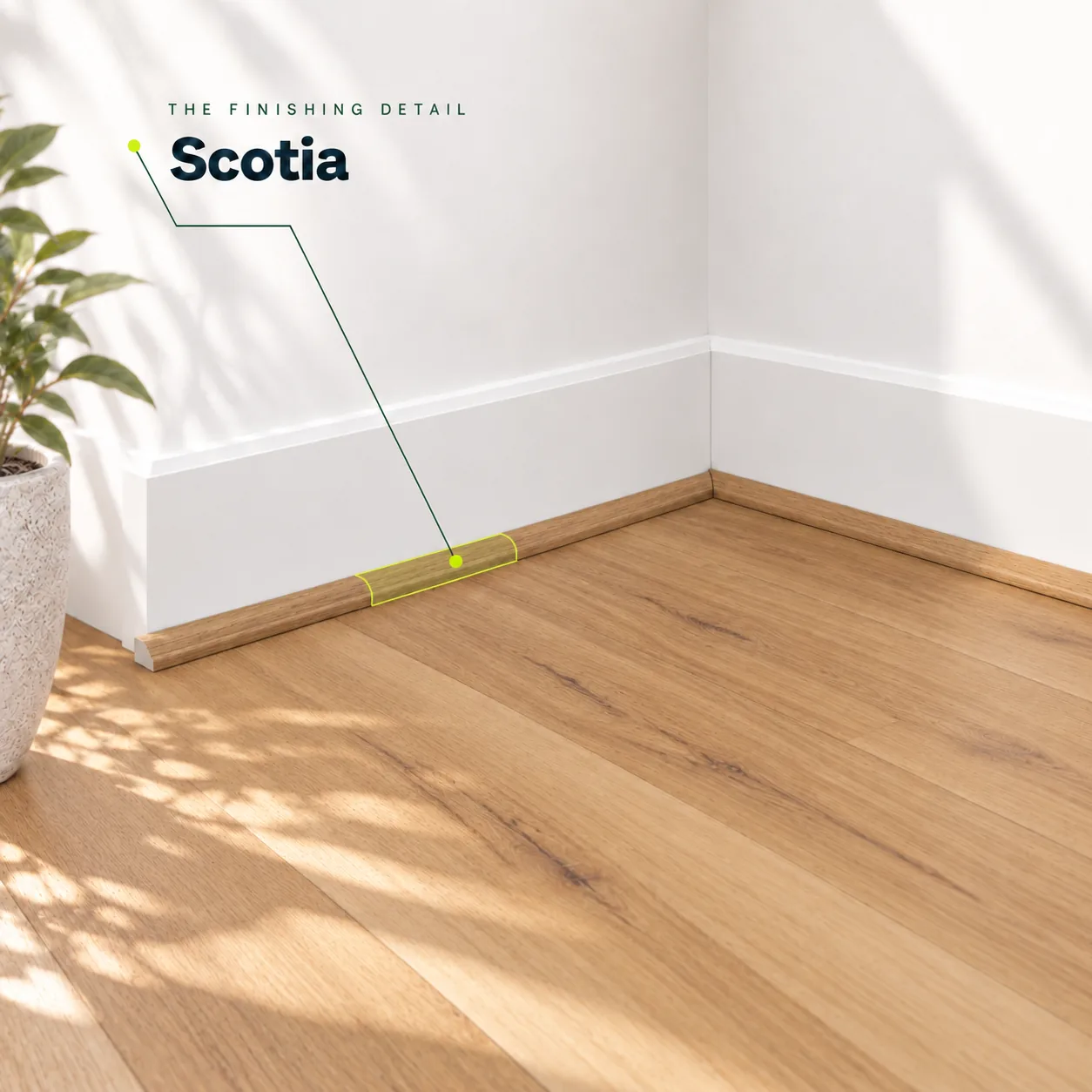
Coastal Blackbutt Scotia
$12.60 each
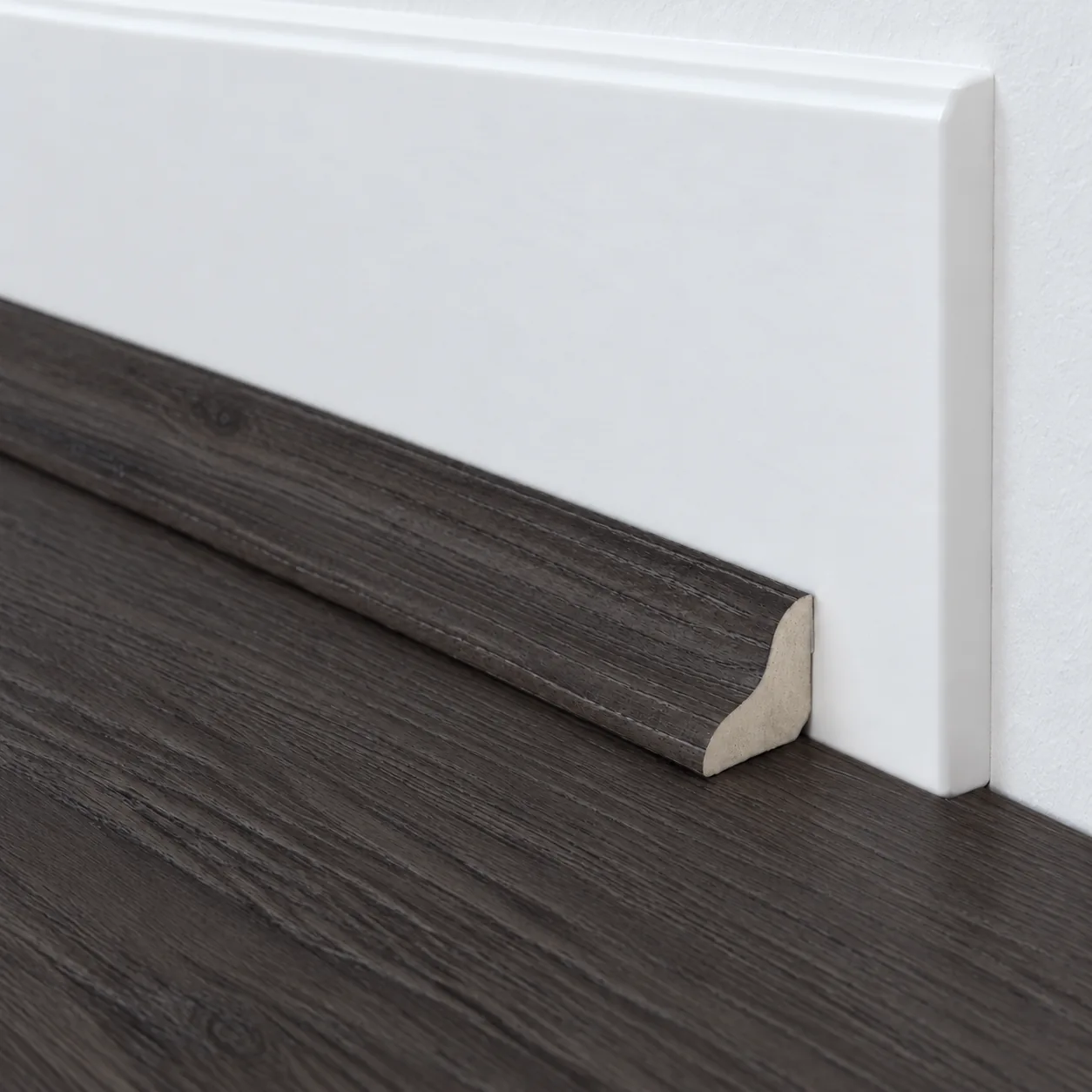
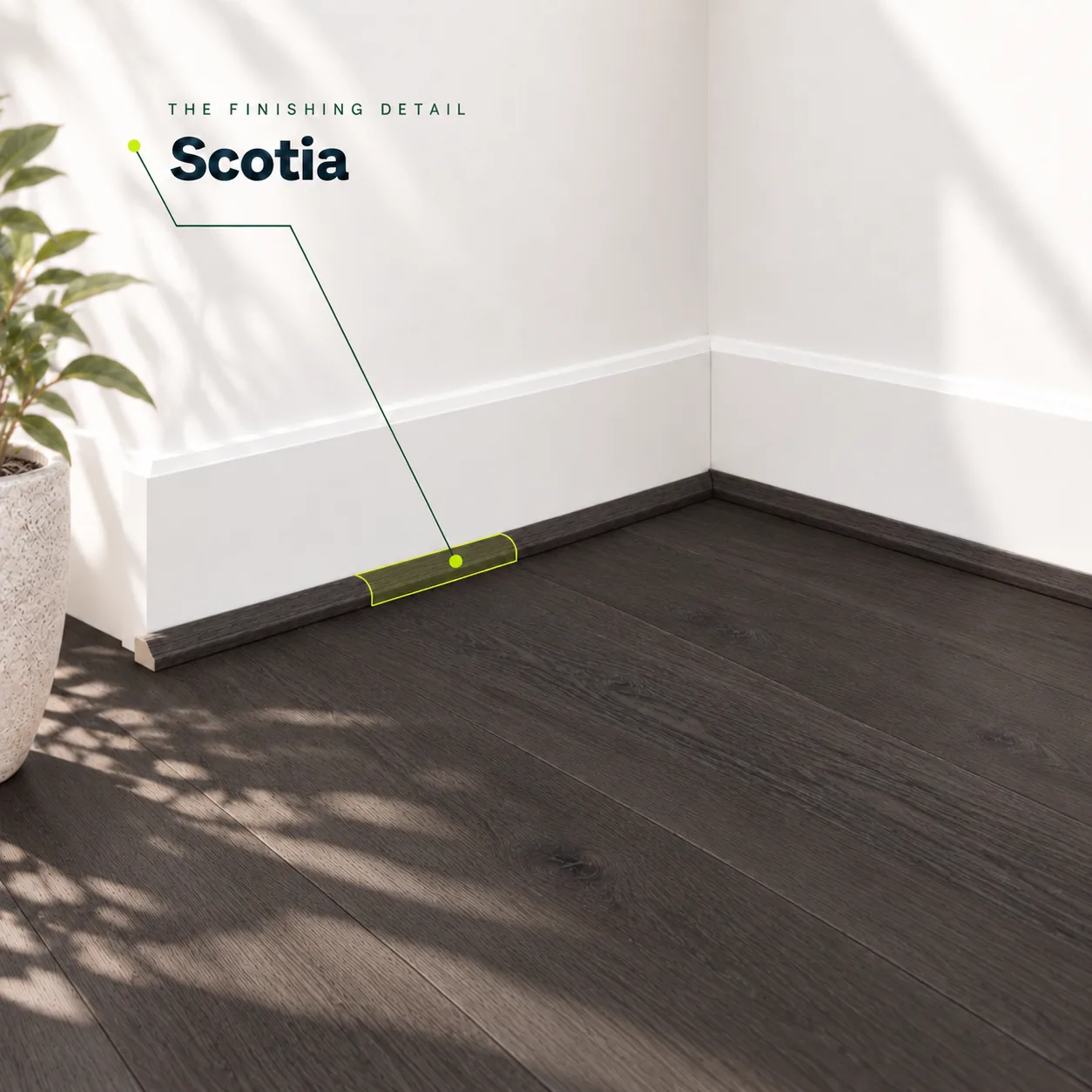
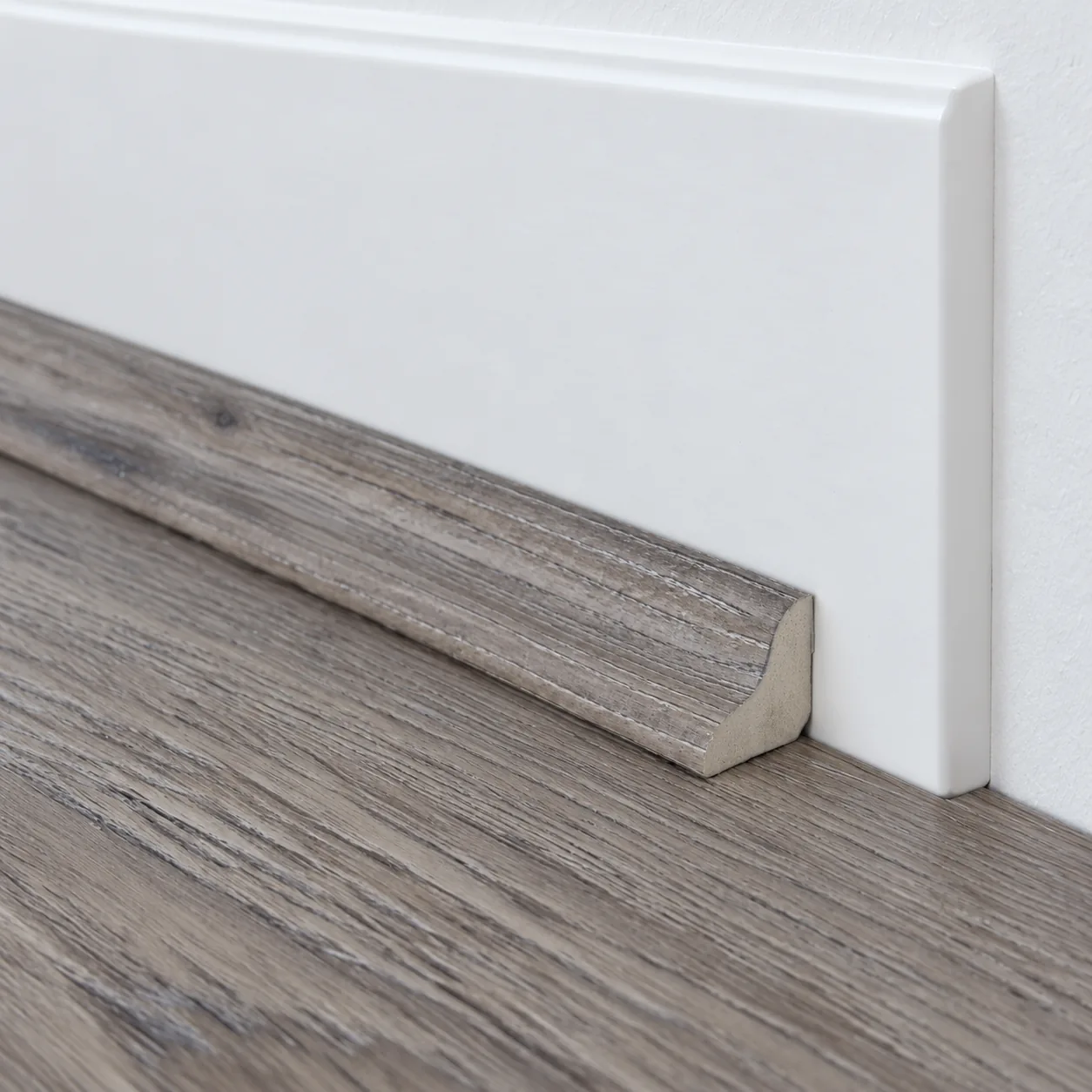
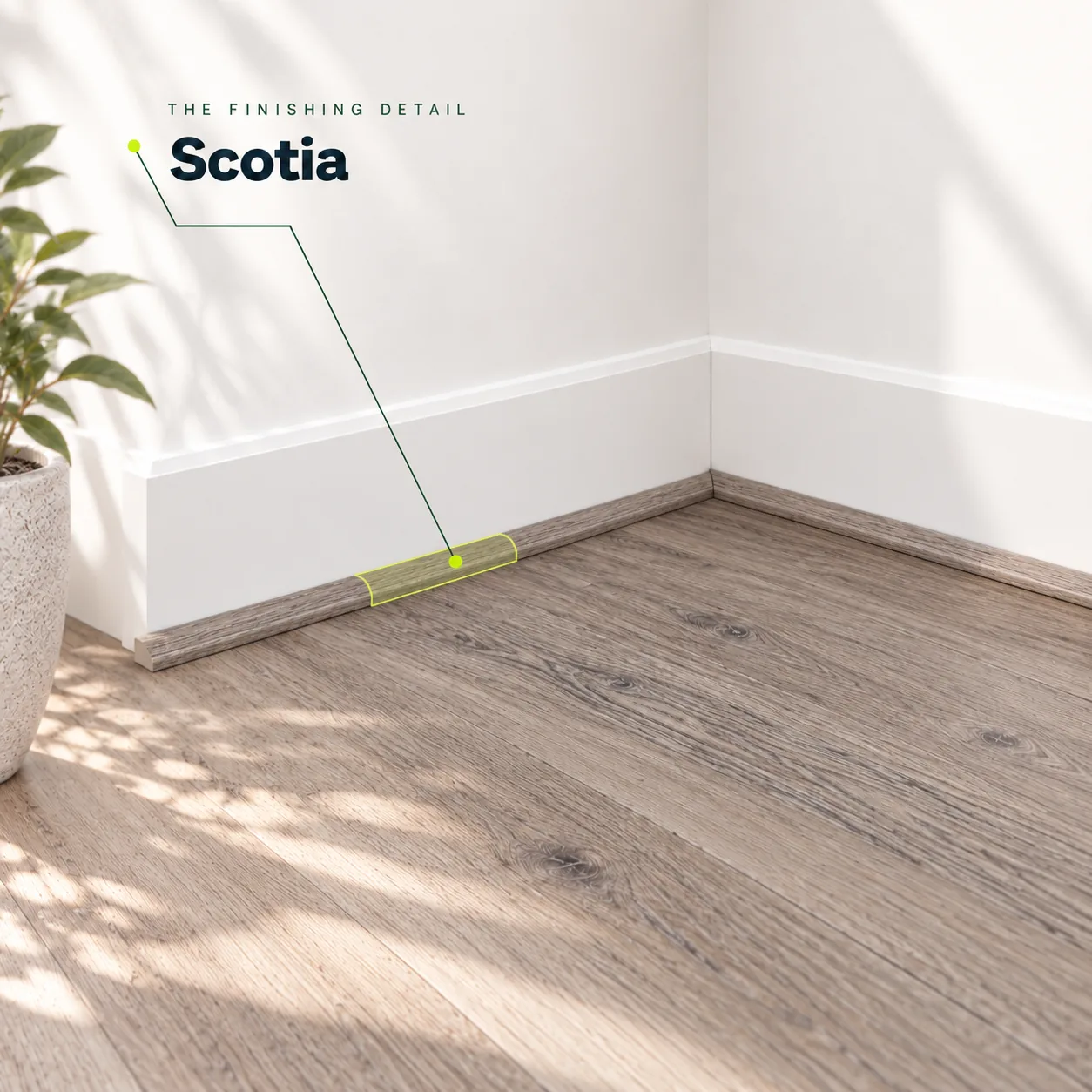
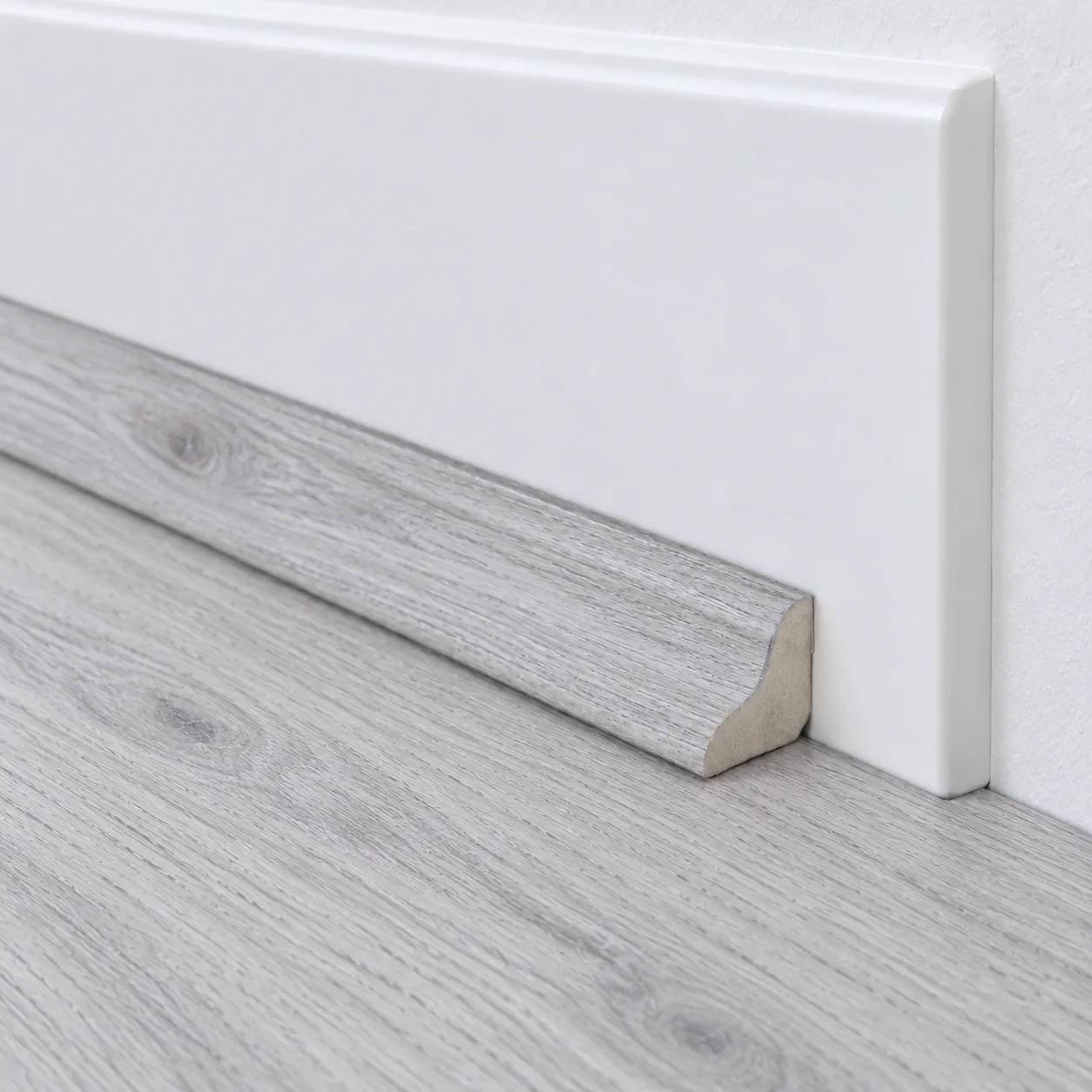
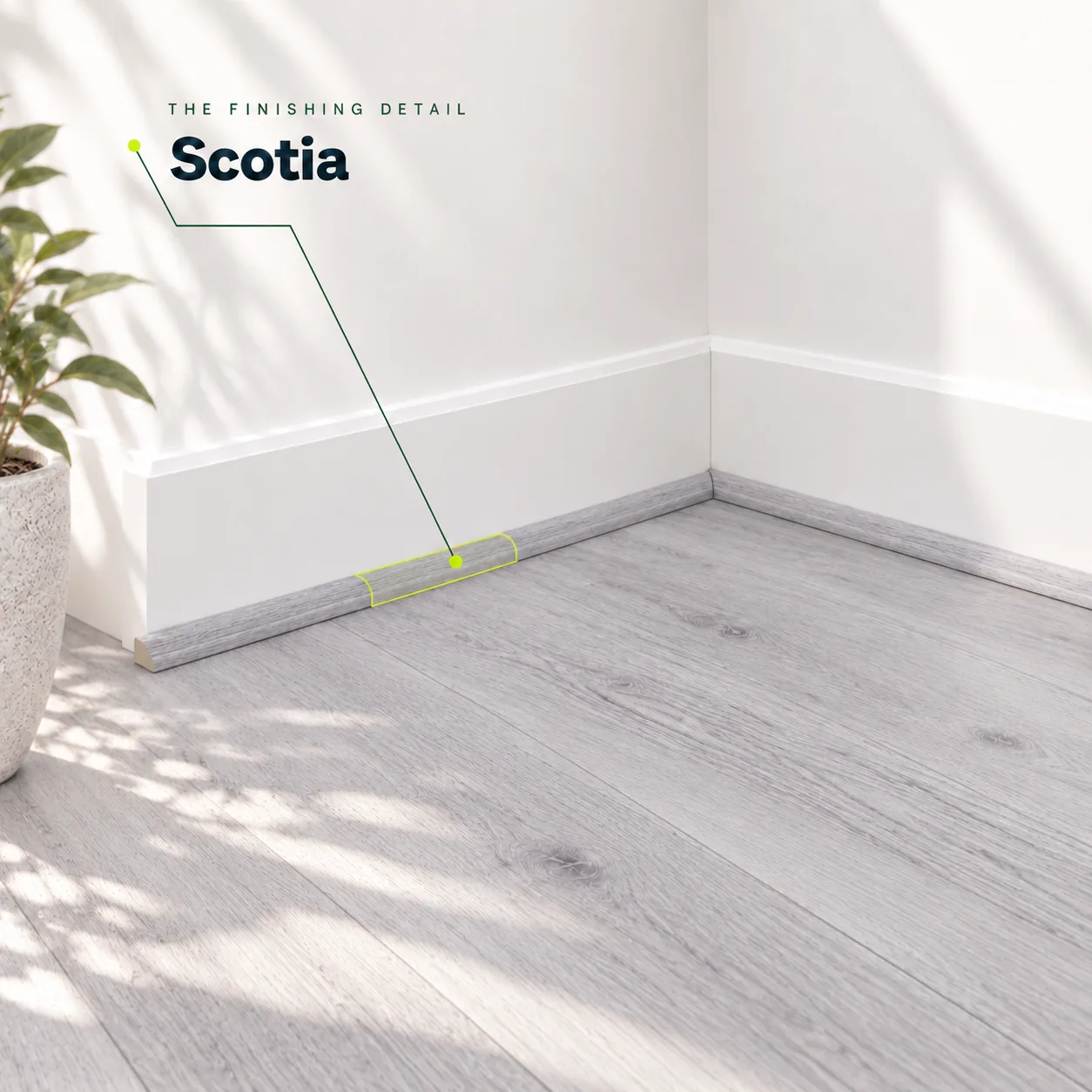
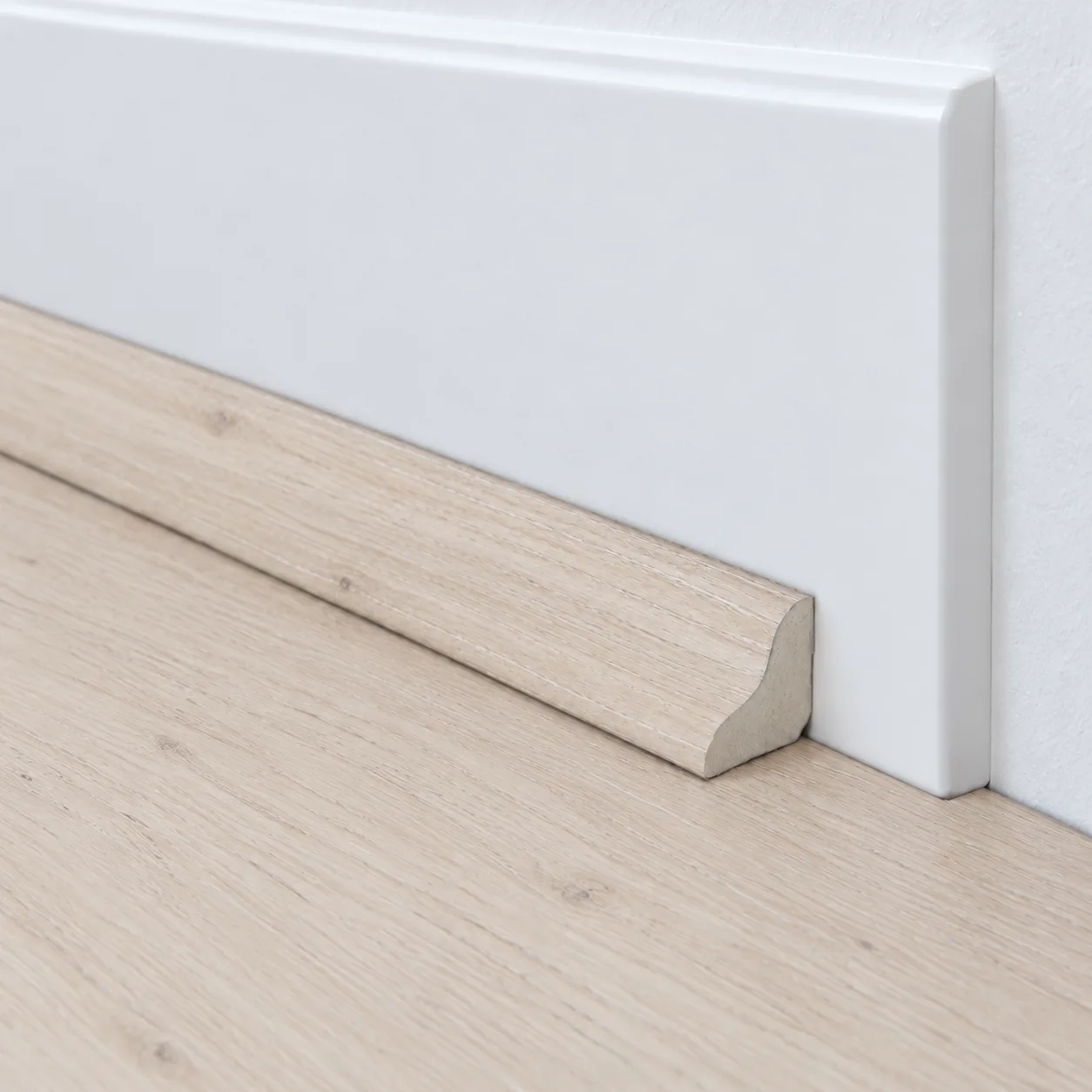
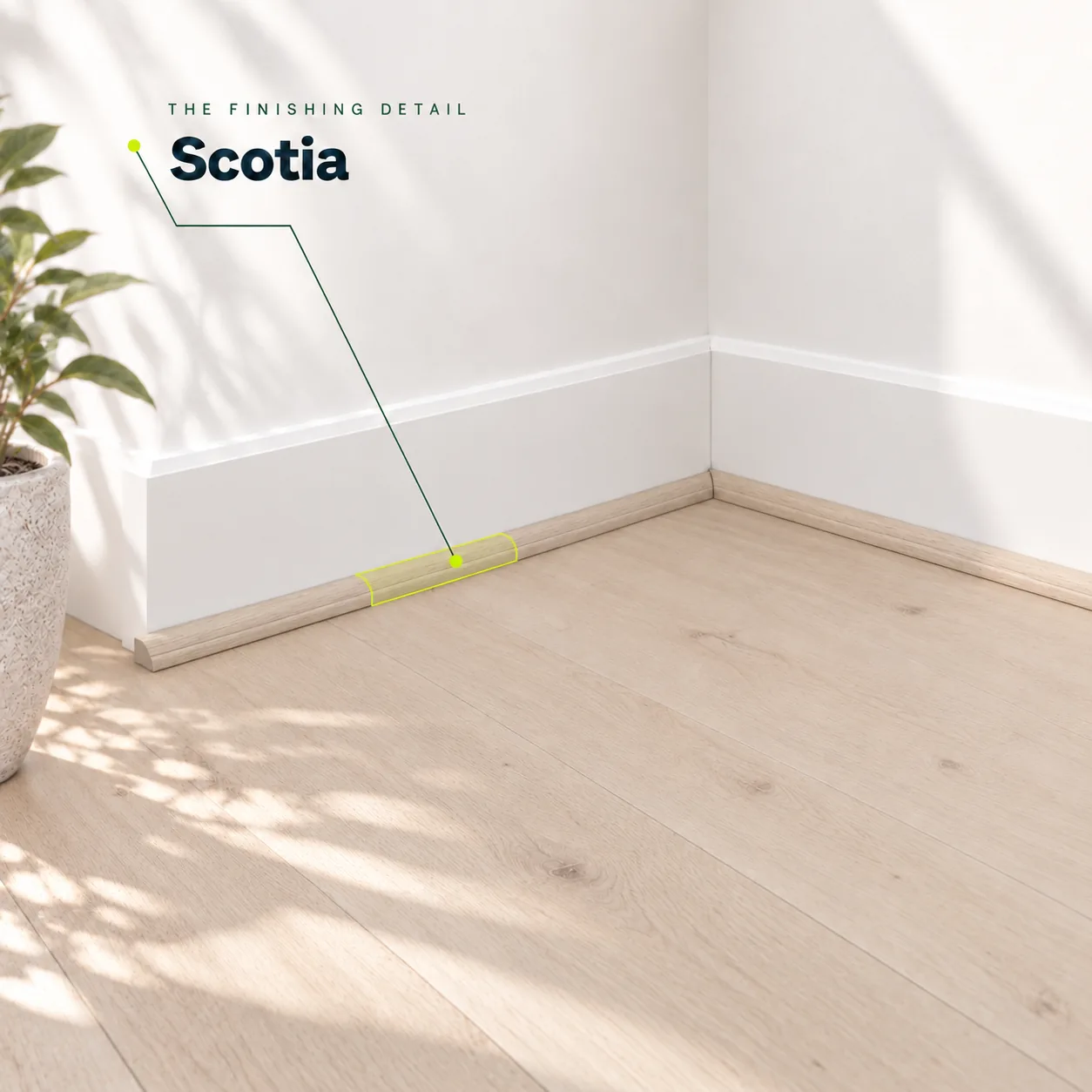
Scotia trim is a thin strip fixed along the bottom of your skirting. It covers the expansion gap a floating floor needs at the walls, so the skirting can stay where it is. Ours is colour-matched to 19 of our SPC hybrid floor colours, 2400 × 28 × 15mm, $12.60 for a 2.4m length, delivered Australia-wide.
$12.60 each
$12.60 each
$12.60 each
$12.60 each
$12.60 each
$12.60 each
$12.60 each
$12.60 each
$12.60 each
$12.60 each
$12.60 each
$12.60 each
$12.60 each
$12.60 each
$12.60 each
$12.60 each
$12.60 each
$12.60 each
$12.60 each
Every floating floor needs its gap covered at the walls. What covers it depends on the job:
| Your job | What covers the gap |
|---|---|
| Keeping your skirting | Scotia, glued or pinned to the skirting |
| Replacing your skirting | The new skirting, fitted after the floor. No scotia needed |
| Kitchen cupboards, wardrobes and bulkheads | Scotia, fixed to the kickboard |
| Sliding doors, hearths and step edges | An L-moulding: there's no skirting to fix scotia to |
| Doorways between rooms | A T-moulding, or a reducer where the next floor is lower |
| Stairs | Stair nosing on every step |
See every trim side by side in our floor trims and accessories.
Scotia comes in 2.4m lengths, $12.60 each. Measure the walls the floor touches, divide by 2.4, round up and add one spare for the corners:
| Wall to cover | Scotia | Cost |
|---|---|---|
| 12m (a 3 x 3m room) | 6 lengths | $75.60 |
| 16m (a 4 x 4m room) | 8 lengths | $100.80 |
| 20m (a 5 x 5m room) | 10 lengths | $126 |
| 30m | 14 lengths | $176.40 |
| 45m | 20 lengths | $252 |
Leave out doorways and anywhere the floor stops at a sliding door or a step: those take a T-moulding, reducer or L-moulding instead.
Straight answers to what people search for most.
Scotia trim is a thin strip fixed along the bottom of the skirting. It covers the gap a floating floor needs at the walls, so you don't have to take the skirting off. It's also called scotia beading, flooring beading or a scotia profile.
Ours is colour-matched to 19 of our hybrid floor colours, 2400 × 28 × 15mm, $12.60 for a 2.4m length.
Skirting is the board along the bottom of the wall. Scotia is the small trim fixed to the base of the skirting, over the floor's gap.
Replacing your skirting anyway? Fit the new skirting after the floor is down. It covers the gap by itself, so you don't need scotia. Keeping your skirting? Scotia is the quick fix: no prying boards off, and no patching or repainting.
Either, but only into the skirting, never into the floor. Glue it with flexible construction adhesive, or pin it to the skirting. The floor has to move freely under the scotia, so don't run silicone or caulk along the bottom either.
Lay the floor first and take out the spacers. Measure each wall and cut the corners at 45° with a mitre box or drop saw. Then glue or pin each length to the skirting, never through the floor. Leave the bottom edge free: no silicone or caulk.
Measure the walls in metres, divide by 2.4 and round up. Add one spare length for the corners. A 4 x 4m room has about 16m of wall, so it needs 8 lengths: $100.80.
The scotia's own page works it out from your metres.
Our scotia is $12.60 for a 2.4m length, about $5.25 a metre. A 3 x 3m room needs 6 lengths ($75.60), and a 5 x 5m room 10 ($126), each with a spare.
It needs its gap covered: 8 to 18mm at every wall for our hybrid floors. Scotia does that when the skirting stays. If you're fitting new skirting after the floor, the skirting covers the gap, so you can lay hybrid flooring without scotia.
New skirting, fitted after the floor is down. That's the cleanest finish, but it means taking the old skirting off, then patching and painting. At sliding doors, hearths and steps there's no skirting to fix scotia to: use an L-moulding to cap the edge instead.
Each scotia is made to match one of our hybrid floorboard colours, so pick the one with your floor's name. Our 6.5mm and 9.5mm colours use the same size, 2400 × 28 × 15mm. Not sure which colour you have? Order free samples of the floor first.
Yes. Fix it to the kickboards of kitchen cupboards, wardrobes and bulkheads the same way you would to skirting, never to the floor. Lay the floor up to them with the same gap as at the walls.
Straight answers for the edges of your floor:
Need a hand choosing? Talk to our team.